
Decorating Styles Compared: Scandinavian, Japandi, Bohemian, and Mid-Century Modern

Key Takeaways
- Scandinavian design prioritizes simplicity, light, and functional comfort using a neutral palette.
- Japandi blends Japanese minimalism with Scandinavian warmth for a serene, clutter-free aesthetic.
- Bohemian style embraces layered textiles, global patterns, and personal self-expression without strict rules.
- Mid-Century Modern draws on 1950s-60s design principles: clean lines, organic shapes, and retro warmth.
- Each style can be adapted to most budgets by focusing on key signature pieces and restraint.
Our Verdict
All four styles offer genuine pathways to a cohesive, inviting home-even without a design background or large budget. The right choice comes down to your personality, how you use your space, and how much visual complexity feels comfortable day to day.
| Best for | Recommended |
|---|---|
| Those who value calm, clutter-free living with low maintenance | Scandinavian or Japandi |
| Creative personalities who enjoy collecting and layering meaningful objects | Bohemian |
| Those drawn to retro character and statement furniture | Mid-Century Modern |
| Anyone wanting a hybrid approach | Japandi (bridges Scandinavian and Japanese sensibilities) |
What Sets These Four Styles Apart
Interior design can feel overwhelming when the internet offers dozens of competing aesthetics. Four styles consistently resonate with American homeowners seeking a clear direction: Scandinavian, Japandi, Bohemian, and Mid-Century Modern. Each has a recognizable visual language and a distinct philosophy about how a home should feel-not just look.
Understanding what defines each style-rather than just what it looks like in magazine photos-makes it far easier to apply one to your own space. If you've ever wondered why a room feels flat despite being nicely furnished, differing style signals are often a contributing factor. Our guide to common interior design myths explores this in more detail.
| Scandinavian | Japandi | Bohemian | Mid-Century Modern | |
|---|---|---|---|---|
| Core philosophy | Functional coziness | Imperfect serenity | Personal self-expression | Sculptural functionality |
| Palette | White, pale neutrals, soft gray | Earthy neutrals, charcoal, muted green | Rich jewel tones, warm terracotta | Warm wood, mustard, teal accents |
| Clutter tolerance | Low - clean surfaces preferred | Very low - negative space valued | High - layering encouraged | Moderate - curated display |
| Key materials | Light wood, linen, cotton | Bamboo, rattan, clay, dark wood | Woven textiles, macramé, vintage | Molded wood, steel, fiberglass |
| Ease of mixing existing furniture | Moderate | Lower - deliberate curation needed | High - eclectic by nature | High - pairs well with varied pieces |
| Budget flexibility | High - simple pieces work well | Moderate - quality over quantity | High - thrift finds encouraged | Moderate - key statement pieces matter |
Scandinavian: Calm, Functional, and Light-Filled
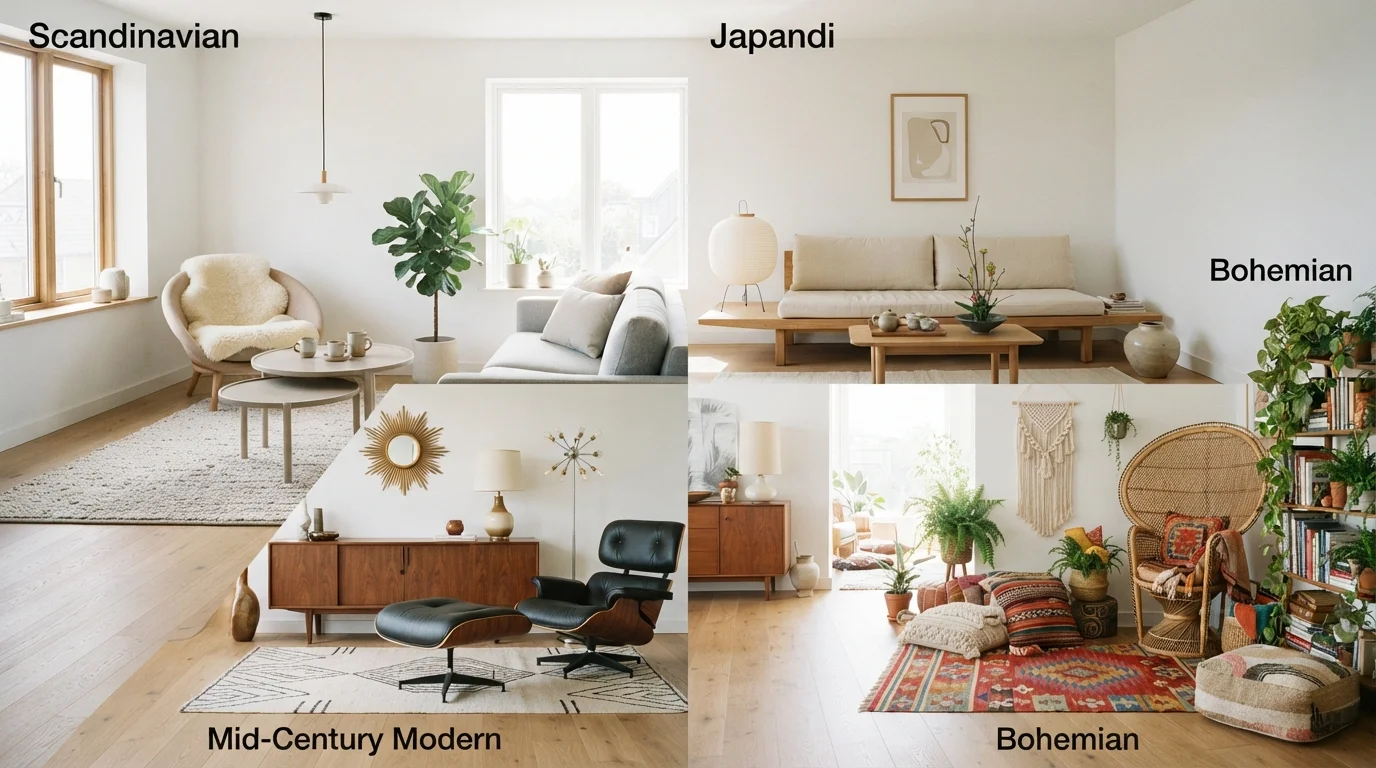
Scandinavian design emerged from Nordic countries where long winters made maximizing natural light a practical necessity. The result is a style built around pale, neutral tones-whites, soft grays, warm beiges-paired with natural wood and minimal ornamentation. Every object tends to serve a purpose.
The concept of hygge (a Danish and Norwegian word roughly meaning coziness or contentment) is central. Soft throws, candles, and comfortable seating are staples. Clutter is avoided not through rigid minimalism but through intentional editing-keeping only what you use or genuinely love.
Signature elements: light-toned wood furniture, white walls, simple cotton or linen textiles, muted greenery, functional storage that disappears into the room.
Start With One Signature Piece
You don't need to redecorate an entire room to shift toward a new style. A single anchor item-a low-profile sofa for Japandi, a layered rug for Bohemian, or a tapered-leg credenza for Mid-Century Modern-can set the direction for everything else. Build outward from that piece slowly, and let each new addition complement what's already there.
Japandi: Where Two Minimalist Traditions Meet
Japandi is a relatively recent hybrid aesthetic that merges Scandinavian simplicity with Japanese wabi-sabi-the acceptance of imperfection and the beauty found in understated, natural things. The palette runs slightly darker than classic Scandinavian, favoring earthy tones, charcoal, and muted greens alongside natural materials like rattan, bamboo, and unfinished clay.
Where Scandinavian interiors feel open and bright, Japandi spaces often feel quietly grounded. Furniture sits lower to the floor. Negative space (empty areas of a room) is treated as a design element rather than something to fill. Handmade or artisan objects with visible texture are preferred over mass-produced polish.
Signature elements: low-profile furniture, artisan ceramics, dark wood or bamboo accents, a restrained neutral palette with earthy depth, and deliberate empty space.
Bohemian: Layered, Personal, and Globally Inspired
Bohemian (often called Boho) style is the most permissive of the four-it actively resists rigid rules. Rooted in the countercultural movements of the 19th and 20th centuries, it celebrates self-expression through collected objects, mixed patterns, global textiles, and lush plant life. A Bohemian room feels lived-in and curated over time rather than designed all at once.
Color is embraced rather than restrained: jewel tones, terracotta, deep blues, and warm rusts sit comfortably alongside neutrals. Layered rugs, macramé wall hangings, vintage furniture, and plants of varying sizes create visual richness. The challenge is avoiding disorder-Boho spaces need an underlying thread (a repeated color, a consistent texture) to feel cohesive rather than chaotic.
Signature elements: layered rugs and textiles, eclectic art, trailing plants, woven baskets, vintage or globally sourced furniture, rich and varied color.
Mid-Century Modern: Retro Lines With Lasting Appeal
Mid-Century Modern draws directly from design produced between roughly the 1940s and 1960s, when architects and designers embraced new materials (molded plywood, fiberglass, steel) to create furniture that was sculptural and accessible. The style is defined by clean horizontal lines, tapered legs, organic curves, and a warm, wood-forward palette.
Unlike the other three styles, Mid-Century Modern is explicitly historical-it references a specific era. That said, it adapts well to contemporary homes because its shapes feel timeless rather than dated. A well-chosen sofa or credenza with tapered legs can anchor an entire room. The palette mixes warm neutrals with period-specific accent colors: mustard, burnt orange, avocado green, and teal.
Signature elements: furniture with tapered wooden legs, sunburst or starburst motifs, statement lighting, warm wood tones, and restrained but bold accent colors.
If your current space feels like it no longer reflects you, these signals that your décor has outgrown its style can help you identify where to start refreshing. And if you're decorating from the ground up, a room-by-room decorating framework provides a structured starting point.
Top 3
Most-searched interior styles in the US
Scandinavian, Mid-Century Modern, and Bohemian consistently rank among the most-searched home décor styles on major search platforms, reflecting sustained consumer interest.
~60%
Americans who describe their style as "mixed"
Survey data from home décor platforms suggests the majority of homeowners draw from more than one aesthetic rather than committing to a single defined style.
Choosing a Style That Fits Your Life
No design style is inherently superior-the right one is the one you'll sustain and enjoy. A few practical questions help narrow the choice:
- How much visual complexity do you find restful vs. stimulating? Scandinavian and Japandi reward those who find calm in simplicity. Bohemian suits those energized by richness and variety.
- Are you starting fresh or working with existing furniture? Mid-Century Modern and Bohemian both integrate well with mixed or older pieces. Japandi typically requires a more deliberate curation.
- How much ongoing maintenance feels acceptable? Minimalist styles like Japandi show clutter immediately; Bohemian interiors are naturally more forgiving of everyday mess.
You don't need to commit to a single style wholesale. Many well-designed homes borrow from two-Scandinavian structure with Bohemian warmth, or Mid-Century bones with Japandi restraint. What matters is a consistent underlying logic: a shared palette, a repeated material, or a unified mood that ties the choices together. The myths holding many rooms back often involve trying to mix styles without that unifying thread.