
Textile Layering 101: Using Rugs, Throws, and Cushions to Add Depth Without Clutter

Key Takeaways
- Textile layering uses rugs, throws, and cushions together to add warmth and visual depth to any room.
- A rug should be large enough to anchor the main furniture grouping - undersized rugs flatten a room.
- Limit cushion groupings to three to five pieces using varied sizes but a shared color story.
- Throws work best when casually draped rather than folded perfectly, which reads as more natural.
- Mixing two to three textures is enough; more than that risks visual clutter rather than coziness.
Start here
What Textile Layering Actually Means
Next
Starting with the Right Rug
Then
How to Use Throws Without Making a Mess
Build on it
Cushion Arrangements That Look Intentional
Finish strong
Keeping It Cohesive, Not Chaotic
What Textile Layering Actually Means
Textile layering is the practice of combining soft furnishings - rugs, throws, and cushions - at different heights and with varied textures so a room reads as warm and finished rather than sparse or staged. It's one of the most affordable ways to transform how a space feels, and it doesn't require design training.
The reason layering works is largely sensory. A room with a bare floor, a bare sofa, and no tactile variety looks fine in a floor plan but feels cold in person. As explored in why rooms that look great in photos feel empty in person, staged spaces often skip exactly these details - the ones that make a home feel genuinely occupied.
The key word is layering, not accumulating. More textiles alone won't improve a room; the relationship between pieces - their scale, color, and texture - is what does the work.
Textile layering
The practice of combining multiple soft furnishings - rugs, throws, cushions - to add warmth, texture, and visual interest to a room without making it feel cluttered.
Anchor rug
A large area rug placed beneath a furniture grouping to visually tie the pieces together and define the boundaries of a seating or living area.
Texture contrast
Placing materials with noticeably different surface qualities - such as smooth cotton next to chunky knit - side by side so each one stands out more clearly.
Color family
A group of colors that share an underlying tone (warm, cool, neutral) and look harmonious together even if they aren't identical shades.
Lumbar cushion
A small, rectangular cushion designed to support the lower back, often used as an accent piece at the center of a sofa arrangement.
Negative space
Areas in a room left intentionally bare or simple to give the eye a visual rest and prevent the space from feeling overcrowded.
Starting with the Right Rug
A rug is the foundation of any layered living space. Its job is to anchor the furniture grouping and define where the seating area begins and ends. The single most common mistake is choosing a rug that's too small - one that floats in the middle of the room without touching any furniture legs, which makes a space feel disconnected.
As a practical rule, aim for a rug where at least the front legs of your main sofa and chairs sit on it. In most average American living rooms, that means an 8×10 or 9×12 foot rug. If budget is a concern, a larger rug in a simpler weave will do more for the room than a smaller rug with an elaborate pattern.
Bigger rugs anchor better than patterned ones
When choosing between a larger plain rug and a smaller patterned one at a similar price, the larger rug will almost always do more for the room. Size creates grounding; pattern adds detail but doesn't fix scale problems. Get the foundation right first, then layer pattern through cushions and throws.
For texture, consider the room's existing surfaces. A smooth hardwood floor pairs well with a looped or shaggy rug; a plush wall-to-wall carpet (if you're adding a rug on top for definition) calls for a flatter, thinner weave. Contrast between the floor and the rug creates the depth you're aiming for.
How to Use Throws Without Making a Mess
A throw blanket serves two purposes: it adds a layer of texture to furniture, and it signals that the space is meant to be used and enjoyed. The challenge most people run into is placement - throws either look too rigid (folded in a neat square) or too careless (bunched in a heap).
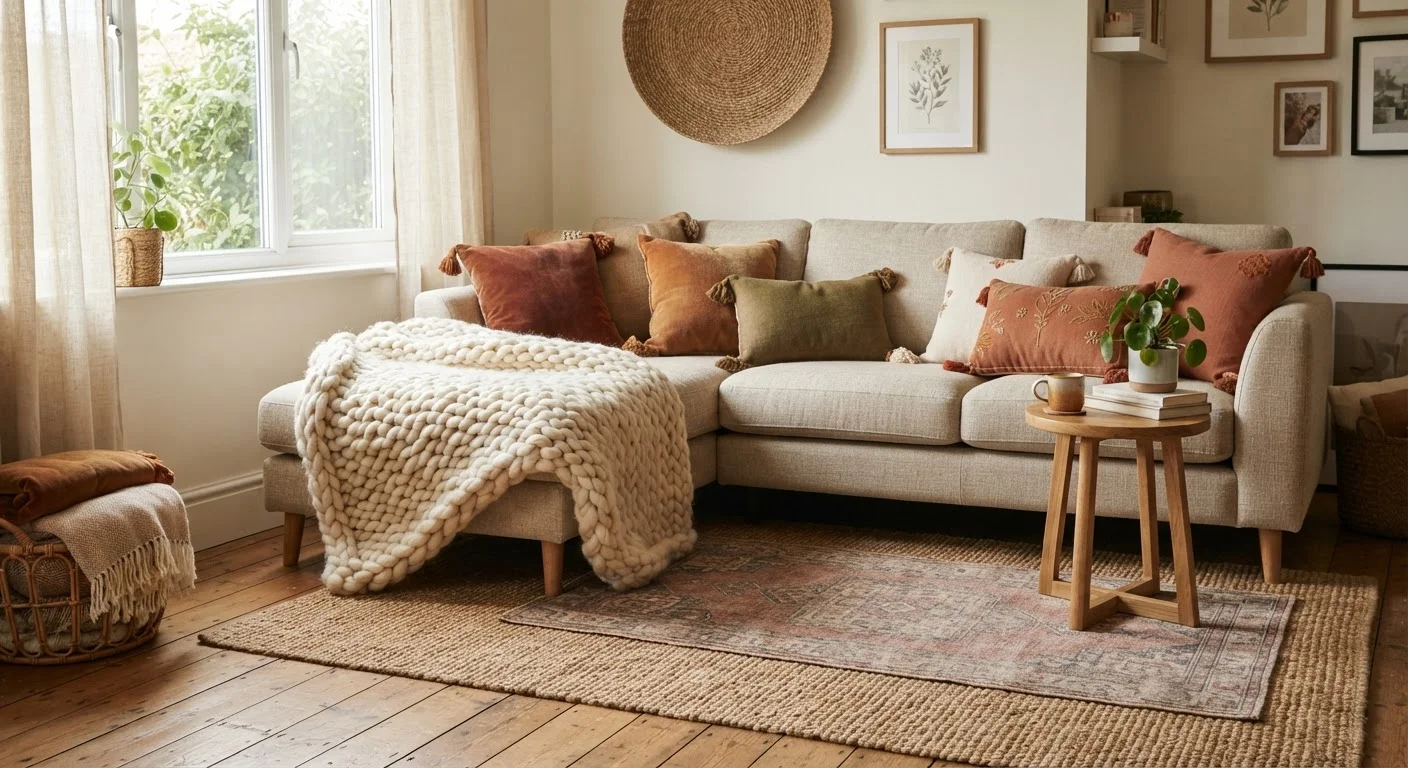
The most natural approach is to fold the throw loosely once lengthwise, then drape it across one arm of the sofa or over a corner, letting it fall slightly toward the seat cushion. This mimics how a throw looks after someone has actually used it, which is the effect you want.
Stick to one throw per seating piece. A sofa with three throws on it stops looking cozy and starts looking unsorted. If you have an armchair nearby, a throw there creates a coordinated moment without redundancy. For color, your throw doesn't need to match - it should relate. If your cushions use warm terracotta tones, a throw in a muted rust or soft caramel continues that warmth without being identical.
Cushion Arrangements That Look Intentional
Cushions are where many people either over-invest (twelve cushions on a two-seat sofa) or under-invest (two matching cushions placed symmetrically). Neither extreme creates depth. The goal is a small, deliberate grouping with variety built in.
A workable formula for a standard three-seat sofa: two larger cushions (around 20-22 inches square) as the outer pair, two medium cushions (18 inches) in the middle in a contrasting texture, and optionally one rectangular lumbar cushion at the center front. That's five pieces maximum, and each one earns its place.
Vary the covers by texture - mix linen with velvet, or a woven pattern with a solid - but keep colors within the same family. This is what makes the grouping look curated rather than collected. If you're building a room's style from the ground up, the complete approach to decorating a home from scratch covers how soft furnishings fit into the broader interior framework.
Avoid matching everything too precisely
Cushion sets where every piece is identical can make a sofa look more like a showroom display than a real home. Small differences in texture, scale, or shade between cushions are what make the arrangement look considered. Buy pieces individually or in small complementary groups rather than as a complete matching set.
Keeping It Cohesive, Not Chaotic
Once you have rugs, throws, and cushions in place, the final step is stepping back and editing. Textile layering tips into clutter when there's no shared thread connecting the pieces. A simple way to maintain cohesion is to pick two anchor colors and one or two textures, then let everything in the room reference those choices in some way.
It also helps to leave negative space. Not every surface needs a textile. A bench without a throw, or a chair without cushions, gives the eye somewhere to rest and makes the layered areas stand out more, not less. This principle aligns with the broader point made in interior design myths that keep rooms looking flat - restraint is often more effective than addition.
Finally, textiles need upkeep to keep looking their best. Fluff cushions regularly, rotate which armrest your throw hangs from, and shake out rugs periodically. A well-maintained layered room stays inviting without requiring constant restyling.