

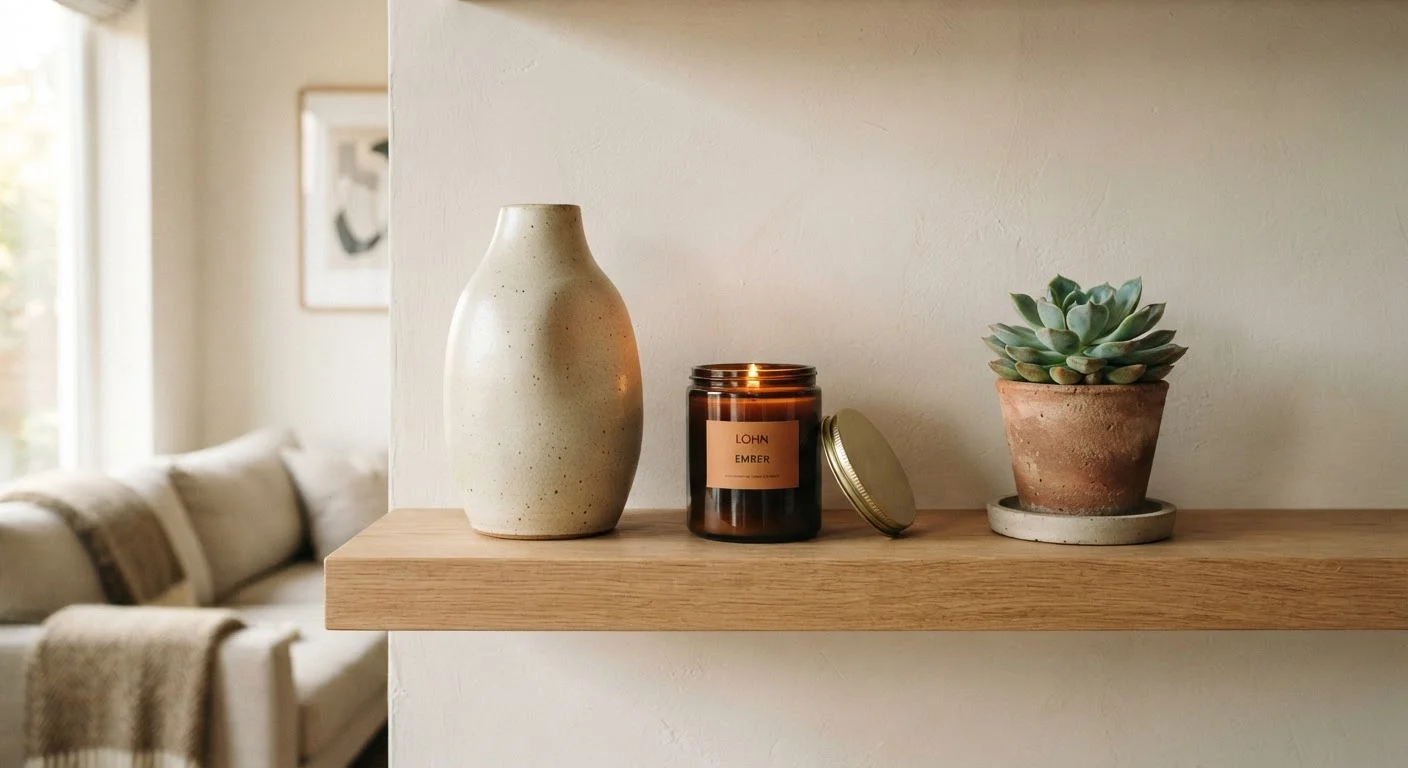
Key Takeaways
- Odd-numbered groupings look more natural and dynamic than even-numbered ones.
- Vary the height, size, and texture of objects within each group for the best effect.
- The rule works on shelves, coffee tables, mantels, and even walls.
- You can apply it by rearranging items you already own - no shopping required.
- Breaking symmetry is the goal; the rule isn't about rigid counting.
Rule of Three
The Rule of Three is a decorating principle that says objects arranged in groups of three tend to look more balanced, interesting, and intentional than pairs or larger even-numbered groupings. Our eyes naturally find odd-numbered arrangements more dynamic because they resist perfect symmetry, which can feel too rigid or flat. In practice, it means placing three items of varying height, texture, or size together on a shelf, table, or mantel.
The principle draws on gestalt psychology - specifically, the idea that the brain seeks patterns but is more engaged when a grouping cannot be evenly divided, prompting longer visual attention.
Why Odd Numbers Feel Right to the Eye
There's a reason a single candle on a table looks lonely, two candles look like altar décor, and three candles look styled. It isn't coincidence - it's a predictable result of how the brain processes visual information.
When objects are arranged in even numbers, the eye automatically pairs them and moves on. The composition feels resolved, but also flat. With an odd number, the brain searches briefly for a pairing pattern, finds none, and lingers. That slight tension is what makes the arrangement feel alive.
This isn't mystical - it's consistent enough that professional interior designers treat the Rule of Three as one of the most reliable guidelines in their toolkit. The good news is you don't need any design training to use it. You just need to understand what you're aiming for: a grouping where no two items are so identical that they collapse into a pair.
This Is a Guideline, Not a Formula
The Rule of Three is one of the most cited principles in interior decorating, but it's descriptive rather than prescriptive. It explains why certain arrangements feel balanced - it doesn't mean every surface in your home needs exactly three objects. Use it as a diagnostic tool: if something looks off, ask whether adding or removing one item changes the balance.
How to Build a Group of Three That Works
Effective trios share a connecting theme but differ in at least one key attribute - usually height, texture, or size. Think of the three as a team: they belong together, but each plays a different role.
- Height: Aim for a tall, medium, and short object. This creates a triangular silhouette the eye naturally follows from top to bottom.
- Texture: Mix materials - ceramic with wood, metal with fabric, smooth with rough. Texture contrast keeps each piece visually distinct.
- Scale: Vary the visual weight. A chunky wide candle holder balances a slim tall vase even when their heights differ.
The connecting theme prevents the grouping from feeling random. Color is the easiest unifier - objects that share one color or tone read as intentional even when their shapes are completely different. You can also connect through material (all natural elements), or mood (all rustic, all modern).
For practical room-by-room ideas, this guide to decorating from scratch walks through how these principles build on each other across a whole home.
Try It Before You Buy Anything
Before adding new décor, gather three objects you already own - from different rooms if needed - and experiment with grouping them. Adjust heights by propping items on small books or overturned bowls. You may find the arrangement you want already exists in your home.
Where to Apply It Room by Room
The Rule of Three scales to nearly every horizontal surface in a home.
Living Room
A coffee table trio might be a stack of books, a small plant, and a sculptural object. A bookshelf trio could pair a framed photo, a small vase, and a decorative box - all in the same color family.
Bedroom
A nightstand is a perfect canvas. Three items - a lamp, a small tray, and a single plant or book - keep the surface purposeful rather than cluttered. The lamp typically provides the tall element, doing double duty as décor and function.
Kitchen and Bathroom
Even functional spaces benefit. Three canisters in graduated sizes on a kitchen counter look organized and styled simultaneously. In a bathroom, a soap dish, a small plant, and a candle form a simple, cohesive trio.
Walls
Gallery walls can apply the principle too - three frames grouped closely in a triangular arrangement create a focal point without requiring a full gallery wall. If your space already feels tight, the spatial logic in this guide to arranging furniture in small rooms pairs well with the Rule of Three for keeping compact spaces feeling intentional.
When to Break the Rule
Like any design guideline, the Rule of Three is a starting point, not a law. Some spaces call for symmetry - two matching lamps flanking a sofa, for example, creates formal balance that suits certain room styles perfectly. The rule also isn't an excuse to force three objects into a space that only needs one clear focal piece.
If you find yourself consistently arranging in threes and the room still feels off, the issue may lie elsewhere - perhaps in scale, lighting, or color choices. Common decorating myths can quietly undermine even well-arranged groupings.
The deeper takeaway is this: the Rule of Three works because it breaks perfect symmetry in a controlled way. Once you understand that goal, you're free to achieve it with four objects, or seven, or one dramatically placed anchor piece with breathing room around it. Trust what you see over what you count.
72%
Homeowners who rearrange rather than buy new décor
A survey by the National Association of Home Builders found that many homeowners refresh their spaces primarily through rearrangement and repurposing rather than purchasing new items.
3-5 items
Optimal objects per styled surface, per designers
Interior design educators commonly recommend limiting styled groupings to three to five objects to avoid visual clutter while maintaining interest.