

Key Takeaways
- A morning skincare routine needs only three steps: cleanse, moisturize, and protect with SPF.
- Skipping sunscreen is the single biggest missed opportunity in most morning routines.
- Consistency with simple basics outperforms an elaborate routine done inconsistently.
- Choosing products suited to your skin type makes each step more effective.
- The entire routine can realistically be completed in under five minutes.
What you will need
Why Keep It Simple?
Scroll through social media and you'll find routines with ten, twelve, even fifteen steps. But dermatologists broadly agree that a short, consistent routine beats an elaborate one done sporadically. For most people, three steps in the morning — cleanse, moisturize, protect — cover the fundamentals without demanding a second bathroom shelf.
If you're just getting started, our beginner's guide to skincare walks through what each product category actually does. This article is about getting those basics done fast.
What you will need
What You'll Need
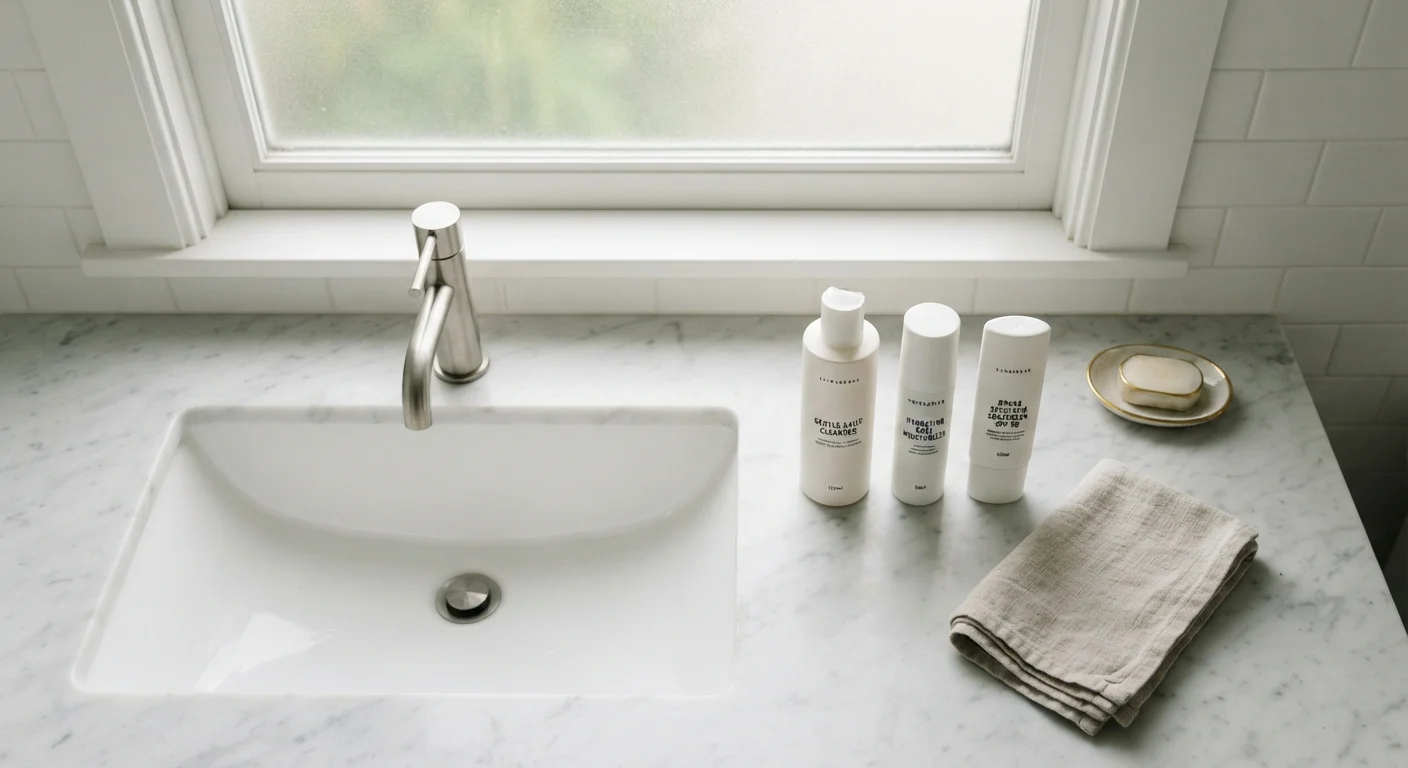
You don't need a cabinet full of products. Three core items handle everything this routine asks of them.
Gentle facial cleanser
Removes overnight oil, sweat, and any residue without stripping the skin's natural moisture barrier.
Facial moisturizer
Replenishes hydration and helps maintain a healthy skin barrier throughout the day.
Broad-spectrum SPF 30+ sunscreen
Shields skin from UVA and UVB rays, the leading environmental cause of premature skin aging and skin damage.
Soft face towel or disposable cloths
For gently patting — not rubbing — skin dry after cleansing.
If you're curious how this pairs with a broader self-care practice, the weekly grooming routine for busy schedules is a natural complement.
The Three-Step Routine
Follow these steps in order each morning. The whole sequence should take between three and five minutes once it becomes habit.
Cleanse your face
Wet your face with lukewarm water. Apply a small amount of cleanser — roughly the size of a nickel — and massage it gently over your face in circular motions for about 30 seconds. Rinse thoroughly and pat dry with a clean towel. Avoid rubbing, which can irritate skin.
If your skin feels tight or dry after cleansing, your cleanser may be too stripping for your skin type. A cream or milk formula is typically gentler for drier complexions; a foaming gel works better for oilier skin.
Apply moisturizer
While skin is still slightly damp, dispense a pea- to dime-sized amount of moisturizer onto your fingertips. Apply it across your face and neck using gentle upward strokes. Give it about 60 seconds to absorb before moving on — this makes the next step easier to apply evenly.
Apply sunscreen
Sunscreen is non-negotiable — even on overcast days, UV radiation reaches the skin. Apply a generous, even layer of broad-spectrum SPF 30 or higher across your face, ears, and the back of your neck if exposed. Most guidelines recommend roughly a quarter-teaspoon for the face alone.
If you wear makeup, mineral sunscreens (those using zinc oxide or titanium dioxide as active ingredients) typically layer well underneath foundation without pilling.
Adjust Based on Season
Your skin's needs shift with the weather. In dry winter months, a slightly richer moisturizer can help compensate for indoor heating and cold air. In humid summer months, a lighter gel moisturizer may feel more comfortable. The three-step structure stays the same — only the specific formulas need to flex.
For what to do after the sun goes down, see our guide on why your nighttime routine looks different — the evening approach works differently and is worth understanding separately.
Making It Stick
The hardest part of any skincare routine isn't choosing products — it's remembering to do it. A few small habits help lock it in:
- Stack it onto something you already do. Place your products next to your toothbrush so the routine follows automatically.
- Keep products visible. Out of sight often means out of mind, especially in the first few weeks.
- Give it two weeks. Skin takes time to respond to new habits. Resist swapping products before you've given a routine a fair run.
New Product? Patch-Test First
Whenever you introduce a new skincare product, apply a small amount to the inside of your wrist or jawline and wait 24 hours before using it on your full face. This is especially important for products containing active ingredients like exfoliating acids or retinoids, though even gentle formulas can occasionally cause reactions. If you experience persistent irritation, redness, or breakouts, discontinue use and consult a dermatologist.
Once you're comfortable with this foundation, you might want to explore a light everyday makeup approach that layers naturally on top of a finished skincare base.
This article is for general informational purposes only and is not a substitute for personalised advice from a dermatologist or qualified skincare professional. If you have a skin condition or concern, consult a healthcare provider.