

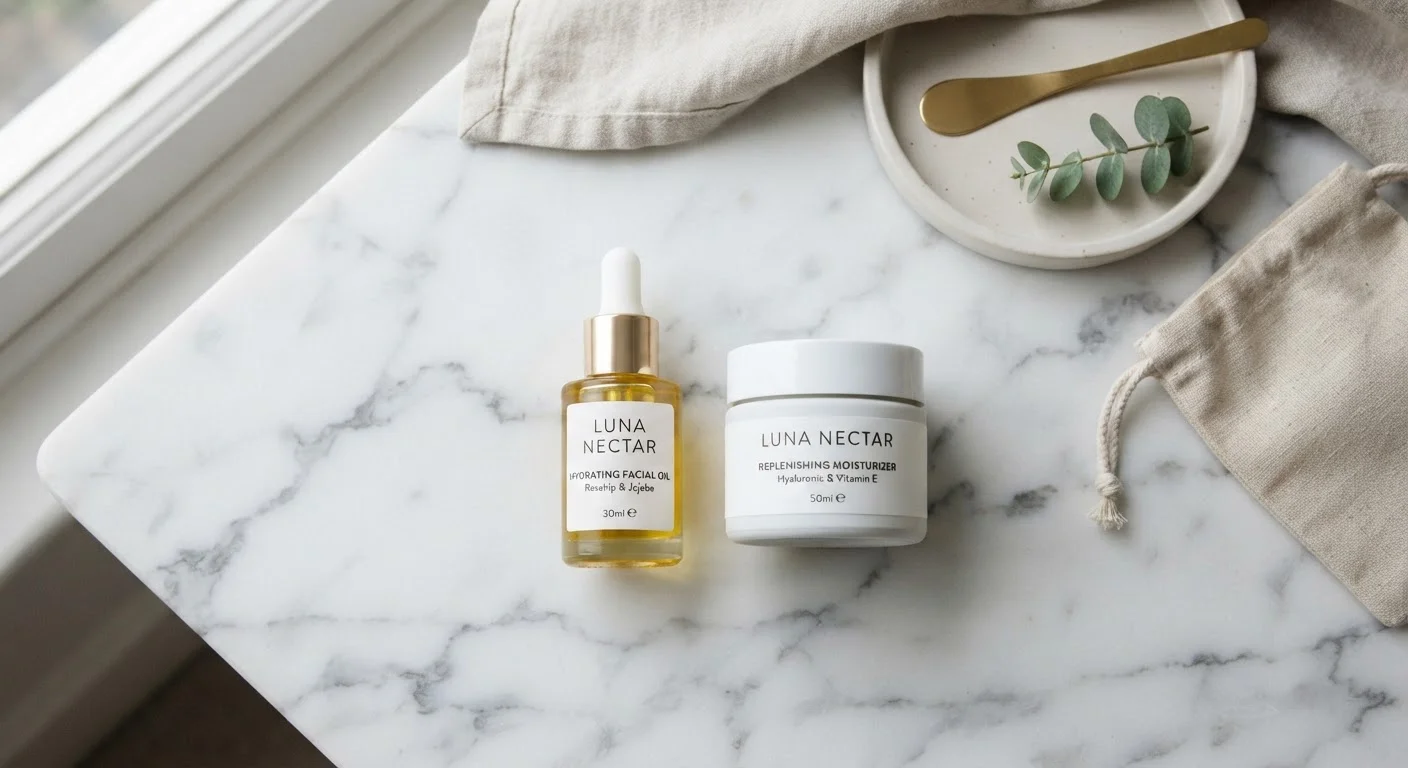
Key Takeaways
- Moisturizers hydrate skin using water-binding ingredients; facial oils seal that hydration in place.
- Facial oils go on last in your routine because oil sits on top of water-based products.
- You do not need both — but pairing them can benefit very dry or mature skin.
- Oily and acne-prone skin types can often use a lightweight moisturizer without adding facial oil.
- Skin type and routine goals should guide your choice, not marketing trends.
Option A
Moisturizer
The all-in-one hydration workhorse.
Best for: Anyone who wants a single step that hydrates, seals, and protects the skin barrier every day.
Option B
Facial Oil
The concentrated barrier-sealing finisher.
Best for: Dry or mature skin types looking for an extra layer of nourishment and a dewy, luminous finish.
If you want a simple, one-step routine
Moisturizer
A good moisturizer covers hydration, barrier support, and often SPF compatibility in one product — no extra steps needed.
If your skin feels persistently tight or flaky even after moisturizing
Facial Oil
A facial oil applied over your moisturizer adds an occlusive layer that locks hydration in, making it ideal for very dry or compromised skin.
If you have oily or breakout-prone skin
Moisturizer
A lightweight, non-comedogenic moisturizer keeps the barrier balanced without the added weight or pore-clogging risk some oils carry.
If you want a glowy, dewy finish for a special occasion
Facial Oil
A few drops of facial oil blended over moisturizer or mixed into foundation creates a natural luminous effect that lasts through the day.
What Each Product Actually Does
At their core, moisturizers and facial oils perform related but distinct jobs. A moisturizer is a formulated blend designed to deliver and retain water in the skin. Most contain three key types of ingredients working together: humectants (like glycerin or hyaluronic acid) that draw water toward the skin, emollients that smooth and soften, and occlusives that form a protective film on the surface. That combination makes moisturizer the reliable foundation of any basic skincare routine.
Facial oils, by contrast, are purely lipid-based — they contain no water at all. They work almost exclusively as occlusives and emollients, forming a barrier over the skin's surface that reduces water loss. Some oils (such as rosehip or marula) also carry antioxidants or fatty acids that support skin health, but their primary job is sealing, not hydrating.
Understanding this difference helps decode why product layering order matters so much: you can't hydrate the skin with oil because there's no water in it to deliver. You need a moisturizer first, then oil to lock things in.
| Criterion | Moisturizer | Facial Oil |
|---|---|---|
| Primary function | Hydrate and retain moisture | Seal moisture and reduce water loss |
| Contains water | Yes | No |
| Key ingredients | Humectants, emollients, occlusives | Plant oils, fatty acids, antioxidants |
| Application order | Before facial oil | After moisturizer |
| Best skin types | All skin types | Dry, mature, dehydrated skin |
| Texture | Cream, lotion, or gel | Lightweight to rich oil |
| Finish | Varies (matte to natural) | Dewy, luminous |
How to Layer Them (and When to Skip One)
If you choose to use both, order is non-negotiable. Apply your water-based moisturizer first, let it absorb for about 60 seconds, then press two to four drops of facial oil over the top. Oil will always sit above water-based products — applying oil first creates a barrier that prevents your moisturizer from absorbing properly.
That said, not everyone needs both. For most skin types, a well-formulated moisturizer is sufficient on its own. Where a facial oil genuinely earns its place is for dry, mature, or dehydrated skin that needs that extra occlusive boost — especially in cold weather or low-humidity environments. If your skin regularly feels tight, dull, or flaky despite regular moisturizing, adding an oil as the final step may make a noticeable difference.
Oily and combination skin types should approach facial oils with caution. While some lightweight, non-comedogenic oils (such as squalane) are generally well-tolerated, others may contribute to congestion. For tailored guidance based on your skin type, see our article on grooming routines across skin types.
A Note on 'Dry' vs. 'Dehydrated' Skin
Dry skin is a skin type — it produces less sebum (natural oil) than other types. Dehydrated skin is a temporary condition in which the skin lacks water, and it can affect any skin type, including oily skin. Moisturizers primarily address dehydration; facial oils are especially useful for dry skin that lacks lipids. Knowing which one you're dealing with helps you shop smarter.
If you're comparing moisturizer to other hydration-focused products, it also helps to know how it differs from serums — check out moisturizer vs. serum for a full breakdown. And for a deeper look at the humectant ingredients often found inside both moisturizers and some oil blends, hyaluronic acid vs. glycerin is worth a read.