

Key Takeaways
- Apply products from thinnest to thickest texture as a reliable baseline rule.
- Cleansing always comes first to prepare skin to absorb what follows.
- Sunscreen goes last in a morning routine — nothing goes on top of it.
- Actives like retinol and vitamin C work best when applied to clean, uncoated skin.
- Layering incorrectly doesn't ruin your skin, but it can waste product efficacy.
Skincare Layering Order
Skincare layering order refers to the sequence in which you apply multiple skincare products so each one can absorb properly and perform its intended job. The general rule is to go from thinnest to thickest texture, starting with water-based formulas and finishing with heavier, occlusive ones. Applying products in the wrong order can block absorption or reduce a product's effectiveness entirely.
Product viscosity, pH level, and molecular weight all influence how well active ingredients penetrate the skin barrier — factors that make sequence more than just a preference.
Why Order Is the Foundation of an Effective Routine
Think of your skin as a door. Products applied first get through most easily; products applied later face increasing resistance. When you layer skincare logically, each step preps the surface for the next. When you layer randomly, you're essentially wasting what's in the bottle.
The core principle is simple: thin to thick. Water-based, lightweight formulas go on first because they're designed to penetrate. Heavier creams and oils go on last because they seal everything in. This isn't arbitrary — it reflects how different formulas interact with the skin barrier.
For a deeper look at the science behind why this works, see why product order matters. Understanding the pH and texture logic can make your routine feel a lot less like guesswork.
When in Doubt, Feel the Texture
Pick up each product and rub a small amount between your fingers. The one that feels most watery goes first; the thickest or most occlusive goes last. This physical check takes two seconds and is more reliable than trying to memorize a fixed list for every routine.
The Standard Layering Sequence, Step by Step
Here's how a well-structured routine generally flows — morning and evening share the same logic, with a few important differences:
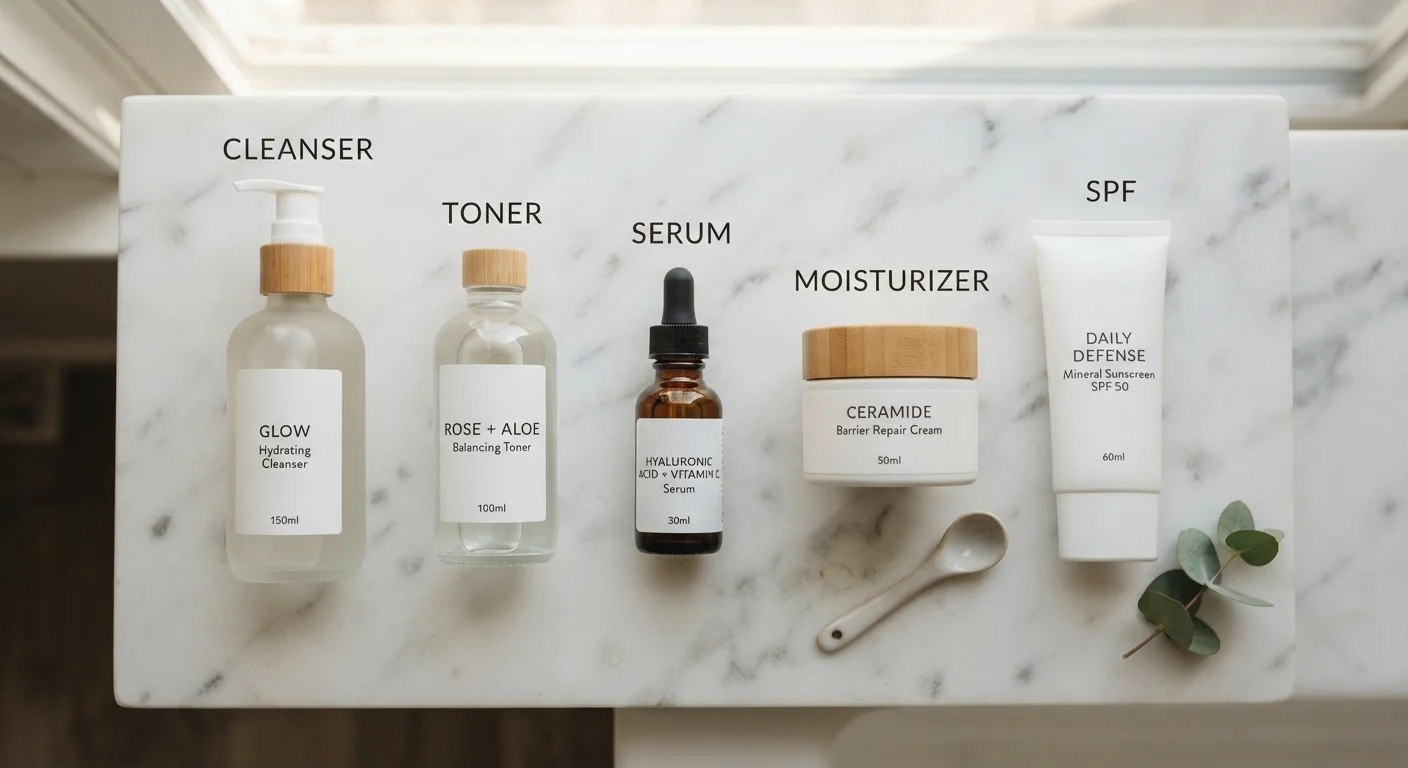
- Cleanser — Always first. Removes dirt, oil, and previous product buildup so what follows actually contacts your skin.
- Toner or Essence — Applied immediately after cleansing, these lightweight liquids rebalance the skin's surface and can boost the absorption of treatments that follow. Not sure what the difference is? Toners, essences, and serums explained breaks it down clearly.
- Targeted Treatments (Serums, Ampoules) — These are your actives: vitamin C, niacinamide, hyaluronic acid, retinol. They go on before moisturizer because their smaller molecules need direct skin access. Serums and moisturizers are not interchangeable — each plays a distinct role.
- Eye Cream — If you use one, apply it before your face moisturizer since it's typically lighter.
- Moisturizer — Seals in the layers beneath and supports the skin barrier. This is the last hydration step.
- Face Oil (optional, PM only) — Oils are occlusive and sit on top of water-based layers. They belong near the end.
- Sunscreen (AM only) — The final, non-negotiable morning step. Nothing goes over SPF.
Morning vs. Evening Routine Differences
Your morning routine focuses on protection — antioxidants, moisturizer, and SPF. Your evening routine focuses on repair — retinol, richer moisturizers, and face oils are all better suited to nighttime use. Sunscreen is never needed in a PM routine, and some actives (like retinol) are best kept out of your morning lineup entirely.
Where Most People Go Wrong
The most common mistake isn't a dramatic misstep — it's applying moisturizer before serum out of habit, or slapping on SPF and then reaching for a setting spray. Small sequence errors compound over time when you're wondering why a product isn't delivering results.
Another frequent issue is mixing incompatible actives at the same time. If you're using retinol and vitamin C in the same routine, for example, many dermatologists recommend splitting them — retinol at night, vitamin C in the morning. Some skincare ingredients simply don't play well together, and knowing which ones to separate can protect both your skin and your investment in those products.
Exfoliants — whether chemical (AHAs, BHAs) or physical scrubs — are another area worth understanding before stacking. Each exfoliation method works differently, and placing them correctly in your routine (and not using them every day) prevents unnecessary irritation.
70%
People who say their routine feels complicated
A consumer survey cited by skincare educators found that roughly 7 in 10 people feel overwhelmed by product layering choices, even when they already own the right products.
2–3 min
Recommended wait time between layers
Skincare professionals generally suggest allowing each product 1–3 minutes to absorb before applying the next, helping prevent pilling and improving efficacy.
Building a Routine You'll Actually Stick With
No routine works if it doesn't fit your life. A three-step morning routine done consistently beats a ten-step routine abandoned by Wednesday. Start with the essentials — cleanser, moisturizer, SPF — and add one product at a time once that baseline feels natural.
If you're new to a product or stepping up your routine, run through this checklist before introducing anything new. Patch testing and gradual introduction reduce the risk of reactions and make it much easier to identify what's working.
As your skin's needs shift over time, your routine can shift too. Skin changes with age, and the layering logic stays the same — but the products you choose at each step may evolve. Also, if you're building your routine toward a polished everyday look, skincare and makeup can work together without compromising what's underneath.
This article is for general informational and educational purposes only. It is not a substitute for professional dermatological advice. If you have a skin condition or concerns about a specific product or ingredient, consult a qualified skincare professional or dermatologist.