
At-Home Grooming vs. Professional Salon Services: Knowing When Each Makes Sense

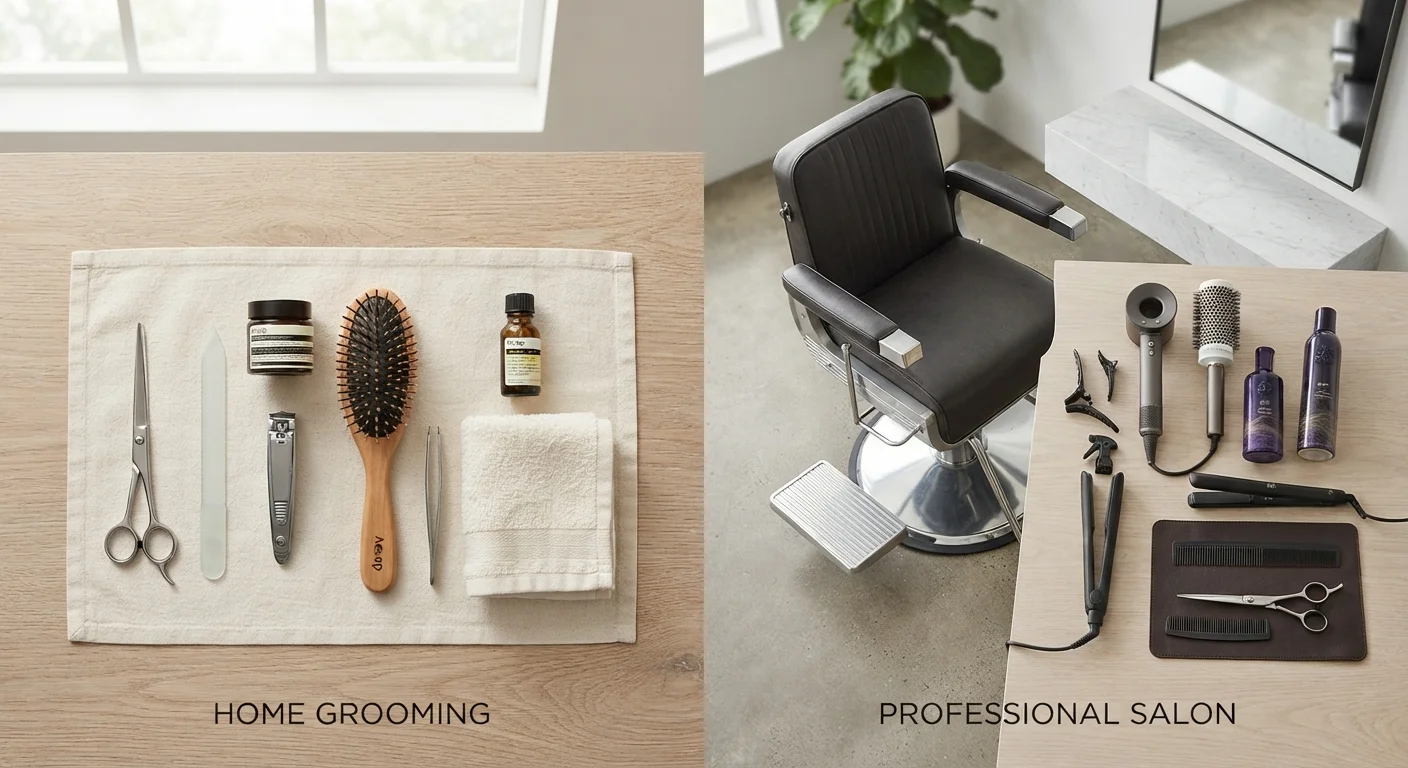
Key Takeaways
- At-home grooming works well for routine, low-risk tasks like moisturizing, basic trims, and nail maintenance.
- Professional services add real value for complex techniques, chemical treatments, and anything requiring precision tools.
- Cost savings from DIY grooming can be significant, but mistakes may end up costing more to fix.
- Your hair type, skin condition, and lifestyle all influence which approach makes more sense for you.
- A hybrid routine — some tasks at home, some at the salon — is the most practical approach for most people.
Our Verdict
Neither at-home grooming nor professional salon services is universally superior — the right choice depends on the task, your skill level, and what you're willing to invest. Most people benefit from a hybrid approach: handling simple, repeatable tasks themselves while turning to professionals for complex work that requires training and specialized tools.
| Best for | Recommended |
|---|---|
| Those managing tight budgets or busy schedules | At-Home Grooming |
| Anyone attempting chemical treatments, precision cuts, or color work | Professional Salon Services |
| Readers with a consistent, simple daily care routine | At-Home Grooming |
| People with specific scalp, skin, or nail concerns needing expert assessment | Professional Salon Services |
The Real Question: Task Complexity, Not Just Cost
The at-home vs. salon debate isn't simply about saving money — it's about matching the right level of expertise to the right task. Some grooming habits are genuinely low-risk and easy to maintain yourself. Others involve enough technical nuance that doing them poorly can set you back further than if you'd skipped them entirely.
A helpful mental framework: consider the margin for error. Applying a basic face moisturizer incorrectly has minimal consequences. Attempting a bleach highlight at home without training carries a much higher chance of damage. Evaluating your existing routine is a smart starting point before deciding where to invest your time and money.
| At-Home Grooming | Professional Salon Services | |
|---|---|---|
| Cost per session | Low — tools paid once, minimal ongoing cost | Higher — service fees plus tip each visit |
| Skill required | Low to moderate for most tasks | High — trained technique essential |
| Risk of error | Low for basic tasks; higher for cuts/color | Low when using a qualified professional |
| Time investment | Flexible — fits into your own schedule | Requires booking, travel, and wait time |
| Results for complex services | Variable; difficult without experience | Consistent and predictable |
| Best suited for | Daily maintenance and simple upkeep | Cuts, color, waxing, and corrective work |
What Works Well at Home
A solid at-home grooming practice covers the everyday maintenance that keeps you looking and feeling put-together between professional appointments. These tasks share a few things in common: they're repeatable, the tools are affordable, and the skill ceiling is low enough that most people can get good results with modest practice.
- Daily skincare: Cleansing, toning, moisturizing, and applying SPF are all straightforward routines anyone can build at home.
- Nail care: Trimming, filing, and keeping nails clean is well within reach for most people. For a deeper dive, nail care at home covers everything from tools to technique.
- Eyebrow maintenance: Tweezing stray hairs between shaping appointments is easy and low-risk once you have a shape to work with.
- Hair conditioning treatments: Deep conditioning masks and scalp oils are safe and effective when used as directed.
- Body hair trimming: With a reliable trimmer, managing body or facial hair at home is practical for most people.
If you're assembling the tools to support these habits, building a grooming kit from scratch outlines the core items worth having on hand.
Start Simple, Then Build Confidence
If you're new to at-home grooming, focus on mastering one or two tasks before expanding your routine. Skincare and basic nail care are ideal starting points because the margin for error is forgiving. As your confidence and tool kit grow, you can gradually take on more — without overreaching into territory better left to professionals.
When a Professional Makes a Real Difference
Certain services deliver meaningfully better — and safer — results when done by a trained professional. This isn't about gatekeeping; it's about recognizing where technical skill, professional-grade tools, and trained eyes genuinely change the outcome.
- Chemical color treatments: Bleaching, highlighting, and color correction involve chemistry that can seriously damage hair if misapplied. Professionals assess your hair's condition before proceeding.
- Precision haircuts: Fades, layered cuts, and structured styles require spatial judgment and technique that take years to develop. An uneven cut can be difficult to correct without losing significant length.
- Waxing and threading: Hair removal in sensitive areas — brows, lip, underarms — is faster, cleaner, and less painful when done by someone experienced.
- Scalp or skin concerns: If you notice persistent flakiness, irritation, or unusual changes, a professional can assess what's happening and recommend appropriate next steps. This is also the point at which a dermatologist or healthcare provider, not just a stylist, may be worth consulting.
For a grounded look at what professionals themselves recommend maintaining consistently, what dermatologists and barbers agree on is worth reading.
Don't DIY Chemical Treatments Without Research
At-home hair color kits and chemical relaxers can cause significant damage — including breakage and scalp irritation — if used incorrectly or on hair that isn't in suitable condition. If you're considering any chemical treatment for the first time, a professional consultation is strongly recommended before you attempt it at home. Correcting a chemical mistake often costs considerably more than the original service would have.
Building a Hybrid Routine That Actually Sticks
The most sustainable grooming approach for most Americans isn't all-or-nothing — it's a thoughtful split. Think of professional appointments as the foundation: periodic sessions that establish your look, handle the technical work, and give you a polished baseline. At-home habits are the maintenance layer that keeps that baseline intact between visits.
A workable structure might look like this: schedule professional haircuts every six to eight weeks, get brows shaped professionally once a month, and handle everything else — daily skincare, nail upkeep, moisturizing — at home. Adjust based on your hair growth rate, lifestyle, and budget.
One more consideration: if you're unsure whether a task falls into the DIY-safe category, common grooming terms and techniques can help clarify what a service actually involves before you attempt it yourself.
~$50–$100+
Average cost of a salon haircut in the US
Prices vary widely by location, salon type, and service complexity — urban areas and specialty salons typically sit at the higher end of this range.
2–4 weeks
Typical time between at-home nail maintenance
Nail growth and wear patterns vary by individual, but most people find a short maintenance session every two to four weeks keeps nails tidy without a salon visit.
This article is for general informational purposes only. For skin, scalp, or health concerns, consult a qualified healthcare professional or licensed dermatologist.