

Key Takeaways
- Clean, trimmed nails require only a few minutes of attention each week.
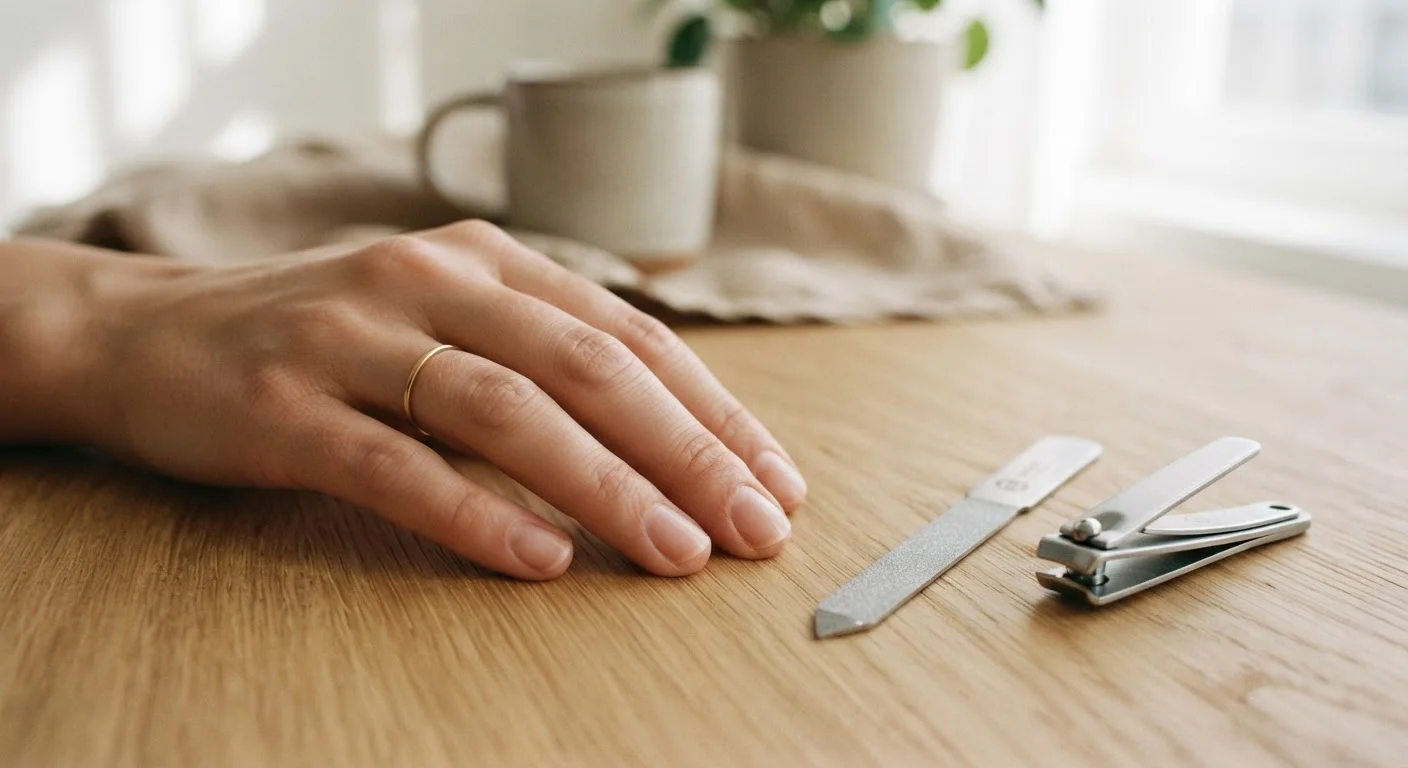
- A nail clipper, file, and cuticle pusher cover the basics for most people.
- Moisturizing hands regularly helps prevent dry, cracked cuticles and brittle nails.
- Persistent changes in nail color or texture are worth discussing with a doctor.
- Nutrition, hydration, and gentle handling all support stronger, healthier nails over time.
Start here
Why Nail Care Actually Matters
Next
The Only Tools You Really Need
Then do this
Your Five-Minute Weekly Routine
Troubleshoot
Common Nail Problems and Simple Fixes
Go deeper
Nail Health From the Inside Out
Why Nail Care Actually Matters
Nails are one of the first things other people notice — a handshake, a gesture, a quick glance. But the case for looking after them goes beyond appearances. Nails that are trimmed and clean are less likely to harbor bacteria, less prone to snagging and tearing painfully, and generally more comfortable to live with day to day.
Nail care also fits neatly into a broader approach to looking after yourself. If you're building out a fuller routine, our guide on personal grooming from hair to toes covers every area worth knowing about. For now, though, nails are a great place to start — the payoff is immediate and the learning curve is almost flat.
The Only Tools You Really Need
Cuticle
The thin layer of skin at the base of the nail that seals the gap between the nail and the finger, protecting the area from bacteria and debris.
Nail bed
The soft tissue directly beneath the visible part of the nail. Keeping nails at a sensible length protects this sensitive area.
Keratin
The structural protein that makes up nails (and hair). Nails are hard because keratin is tightly packed in layers.
Ingrown nail
When the edge of a nail — most often a toenail — grows into the surrounding skin rather than over it, which can cause pain and redness.
Emery board
A disposable nail file made from cardboard coated with a gritty surface, used to shape and smooth nail edges after clipping.
You don't need a drawer full of gadgets. Three items get the job done for the vast majority of people:
- Nail clippers — standard size for fingernails, a slightly larger toenail clipper for feet. Straight-edged clippers work well for toenails; curved ones are common for fingers.
- A nail file or emery board — used after clipping to smooth rough edges and shape the nail. Glass or crystal files tend to be gentler and last longer than disposable cardboard ones.
- A cuticle pusher — a simple wooden or rubber-tipped stick used to gently push back the thin skin at the nail's base after softening it with warm water.
A small bottle of hand and nail moisturizer rounds things out nicely. That's genuinely it. Anything beyond this is optional and mostly a matter of preference.
Keep Your Tools Clean
Nail clippers and files can accumulate bacteria over time, especially if shared. Wipe metal tools with rubbing alcohol occasionally and let them dry fully before storing. Replace emery boards every few weeks, as the abrasive surface wears down and they become less effective.
Your Five-Minute Weekly Routine
Pick one time slot per week — Sunday evening works well for many people — and run through these steps:
- Soften first. Trim nails after washing dishes, showering, or a brief warm soak. Softer nails cut cleanly without cracking or splintering.
- Clip carefully. Trim fingernails following their natural curve, leaving a small sliver of white. For toenails, cut straight across to reduce the risk of ingrown nails.
- File edges. Use your file in one direction to smooth any jagged edges. This takes thirty seconds per hand.
- Push back cuticles. After softening, use a cuticle pusher very gently. Never force or tear.
- Moisturize. Rub a little hand cream or cuticle oil around the nail and into the skin. This step takes ten seconds but makes a noticeable difference over time.
That's the whole routine. For a broader look at fitting grooming habits into a realistic schedule, see the weekly grooming routine that actually fits a busy schedule.
Common Nail Problems and Simple Fixes
Even with a good routine, things come up. Here are the most common issues and straightforward responses:
- Dry, cracked cuticles
- Caused by cold weather, frequent hand washing, or low humidity. Regular moisturizing — especially after washing hands — helps considerably. Avoid picking at them, which creates small wounds prone to irritation.
- Brittle or peeling nails
- Often linked to repeated wetting and drying cycles, or to prolonged contact with harsh cleaning products. Wearing gloves during cleaning tasks and keeping nails shorter can reduce the problem. Persistent brittleness is worth mentioning to a healthcare provider, as it can occasionally reflect nutritional factors or other conditions.
- Ingrown toenails
- Cutting toenails too short or rounding the corners encourages the nail to grow into surrounding skin. Trimming straight across usually prevents this. Mild cases can often be managed at home with warm soaks and proper trimming, but recurring or painful ingrown nails should be evaluated by a clinician.
- Yellow or discolored nails
- Staining from dark nail polish is common and usually harmless. Persistent yellowing without a clear cause is worth a doctor's attention, as it can sometimes signal fungal infection or an underlying health factor.
For a fuller look at grooming areas that are easy to neglect, grooming habits that tend to slip offers honest, practical coverage.
Don't Ignore Persistent Nail Changes
Unusual nail symptoms — including dark streaks, significant thickening, nails lifting from the bed, or persistent discoloration — can sometimes indicate a fungal infection or another health condition. These are not just cosmetic issues. If a change lasts more than a few weeks or is accompanied by pain, bring it up with a healthcare provider rather than waiting it out.
Nail Health From the Inside Out
Nails reflect overall health more than most people realize. They're made primarily of a protein called keratin, and like hair and skin, they respond to what you eat, how hydrated you are, and how you treat your body generally.
Adequate protein, along with vitamins and minerals found in a varied diet — including biotin, zinc, and iron — is associated with nail strength and growth in general nutrition research. Rather than reaching for specific supplements without guidance, focusing on a balanced, whole-food diet is a reasonable starting point. Our nutrition basics hub offers straightforward guidance on eating well without complicated rules.
Staying hydrated helps too — dehydration can make nails more brittle. And habits like chronic nail biting or picking can weaken nails and increase infection risk, so if those are patterns you're working on, it's worth finding a substitute habit (a stress ball, a fidget ring) that keeps hands busy in a less damaging way.
This article is for general informational purposes only and is not a substitute for professional medical advice. If you have concerns about changes in your nails or skin, please consult a qualified healthcare provider.