

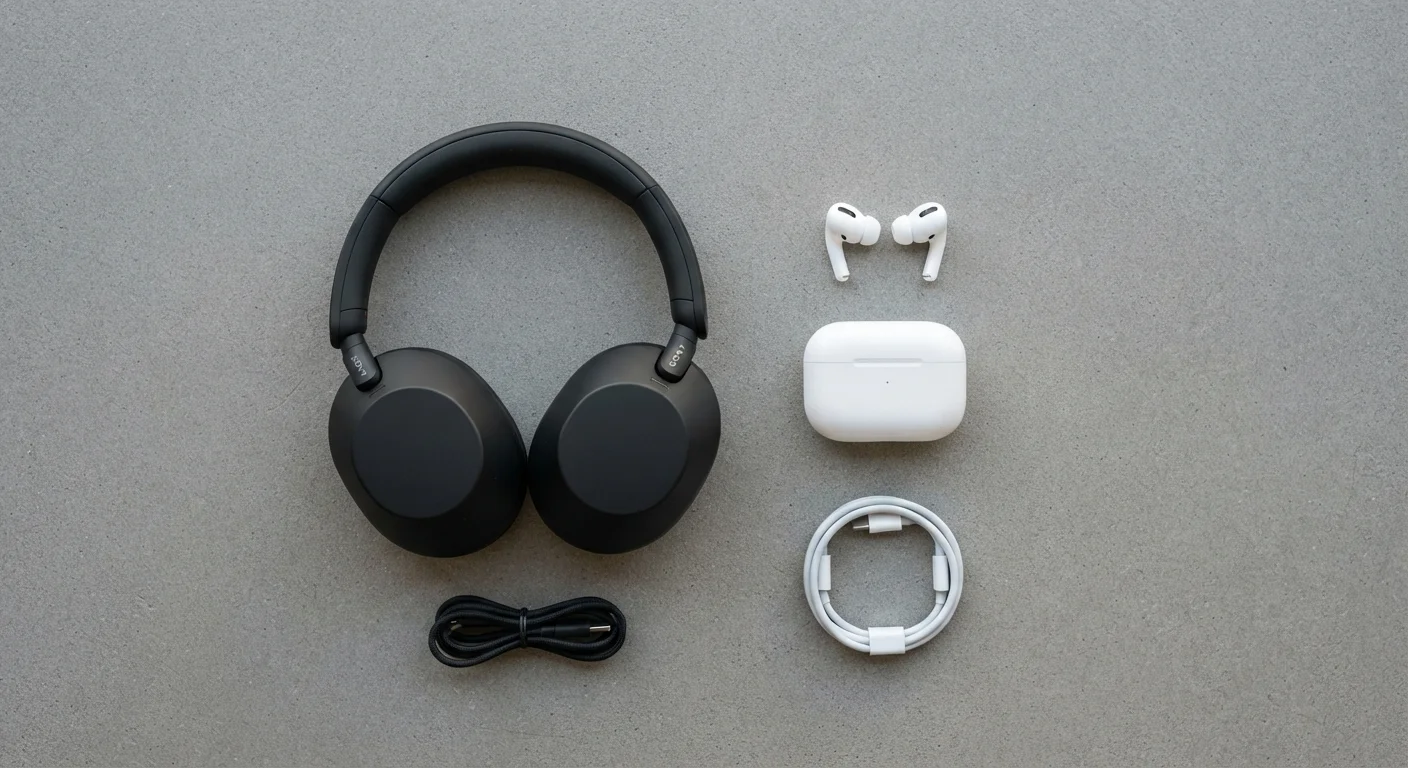
Key Takeaways
- Over-ear headphones generally deliver a wider soundstage and more passive noise isolation due to larger ear cups.
- In-ear headphones are significantly more portable and better suited for commutes, workouts, and on-the-go use.
- Comfort over long sessions often favors over-ear designs, though fit varies considerably by head shape and ear anatomy.
- Neither form factor is universally superior — the right choice depends heavily on your primary listening environment.
- Active noise cancellation is available in both styles, but implementation and effectiveness can differ meaningfully.
Our Verdict
Over-ear headphones reward listeners who prioritize sound depth and extended wear at a desk or at home. In-ear models win on portability and unobtrusiveness for commuters, travelers, and active users. The better choice comes down to where and how you listen most.
| Best for | Recommended |
|---|---|
| Home listening, focused work, or studio-style sessions | Over-ear headphones |
| Commuting, travel, and all-day on-the-go use | In-ear headphones |
| Exercise and outdoor activity | In-ear headphones |
| Long uninterrupted listening without ear fatigue | Over-ear headphones |
How the Two Form Factors Actually Work
Over-ear headphones — sometimes called circumaural headphones — use cushioned ear cups that fully surround your ears. In-ear headphones (also called IEMs, or in-ear monitors) sit directly in the ear canal, using small silicone or foam tips to create a seal. That basic structural difference cascades into nearly every aspect of the listening experience.
The driver — the tiny speaker inside each headphone — is physically larger in over-ear designs. Larger drivers can more easily reproduce low-frequency sound (bass) without distortion, which partly explains why over-ear headphones tend to feel more spacious and full. In-ear drivers are miniaturized but have steadily improved; modern multi-driver in-ear designs can rival over-ear models in detail retrieval, though the acoustic space still feels different.
For more on how wireless connectivity interacts with both form factors, see our comparison of wireless earbuds and wired headphones.
Sound Quality and Soundstage
Soundstage refers to the perceived width and depth of audio — how much a recording feels like it exists in physical space around you rather than just inside your head. Over-ear headphones generally produce a wider, more open soundstage because the drivers sit farther from your eardrum and the ear cup creates a small acoustic chamber. This makes them popular for music mixing, immersive gaming, and film watching.
In-ear headphones place the driver millimeters from the eardrum, which can produce precise, focused detail but a narrower sense of space. That intimacy works well for podcasts, voice calls, and genres where clarity matters more than spatial depth. Many listeners actually prefer this presentation for commuting — background noise competes less when the audio is direct.
| Over-Ear Headphones | In-Ear Headphones | |
|---|---|---|
| Soundstage | Wide, spacious feel | Focused, direct presentation |
| Passive noise isolation | Good via ear cup seal | Good via canal tip seal |
| Portability | Requires bag or case | Pocket-sized, very portable |
| Extended wear comfort | Heat and clamp pressure over time | Canal pressure varies by fit |
| Exercise suitability | Limited, can shift during movement | Generally more secure during activity |
| Bass reproduction | Full, aided by larger drivers | Varies; improves with proper tip seal |
| ANC availability | Common in wireless models | Common in wireless models |
Noise cancellation behavior also differs by form. Over-ear cups provide meaningful passive isolation just by physically blocking the ear. In-ear tips do the same through their canal seal. Active noise cancellation (ANC) — which uses microphones to electronically counter ambient sound — is available in both styles. How active and passive noise cancellation work are worth understanding before you decide which matters more to you.
Comfort, Fit, and Extended Wear
Comfort is deeply personal and hard to predict without trying a pair. That said, patterns exist. Over-ear headphones distribute weight across the top of the head and around the outer ear. After an hour or two, clamping force and heat buildup can become noticeable — especially in warm environments. People who wear glasses may find that the frames interfere with the ear cup seal, reducing both isolation and bass response.
In-ear tips create a seal inside the ear canal, which some people find uncomfortable during extended wear. Ear anatomy varies considerably; a tip size that fits one person perfectly creates pressure or falls out for another. Most in-ear headphones ship with multiple tip sizes, and experimenting with them is worth the effort — fit directly affects both comfort and sound quality.
Getting In-Ear Fit Right
Before judging an in-ear headphone's sound, try all the included ear tip sizes. A poor seal doesn't just cause discomfort — it dramatically reduces bass and isolation, making the headphones seem worse than they actually are. Foam tips often provide a better seal than silicone for people with irregularly shaped ear canals.
For physically active listeners, in-ear designs generally stay put better. Choosing earbuds specifically for running involves additional considerations around fit security, sweat resistance, and controls.
Portability, Durability, and Everyday Practicality
In-ear headphones are simply easier to carry. They fold into a pocket or small case without thought. Over-ear models, even foldable ones, require a bag or dedicated carrying case. For commuters, travelers, or anyone who moves between environments throughout the day, that portability difference is tangible and daily.
Durability is harder to generalize. Over-ear headphones expose more mechanical parts — hinges, headbands, ear cup swivels — that can fail over time. In-ear cables (on wired models) are prone to fraying at connection points. True wireless in-ear designs introduce battery longevity as a separate concern. Proper care habits extend the life of either style meaningfully.
Battery life comparisons between wireless over-ear and wireless in-ear models vary by product, so reviewing manufacturer specifications for any specific pair is worthwhile. If you're evaluating wireless options more broadly, common mistakes when buying wireless earbuds covers details many shoppers overlook.