

Key Takeaways
- Over-ear headphones use larger drivers that generally produce a wider, more spacious soundstage than in-ear designs.
- In-ear headphones create a physical seal in the ear canal, offering strong passive isolation in a compact form.
- Portability and wearability strongly favor in-ear designs, while over-ear headphones typically win on extended comfort for stationary listening.
- Driver size affects bass response and sound staging, but fit and seal matter just as much to real-world audio quality.
- Neither style is universally superior — the right choice depends on how and where you listen most.
Our Verdict
Over-ear headphones deliver a roomier, more immersive sound and are generally well-suited to focused, stationary listening sessions at home or at a desk. In-ear headphones prioritize portability and passive noise isolation, making them practical for commutes, workouts, and on-the-go use. Your daily listening habits — not just audio specs — should drive the decision.
| Best for | Recommended |
|---|---|
| Home listening, desk work, or studio-style use | Over-ear headphones |
| Commuting, travel, and active use | In-ear headphones |
| Long uninterrupted listening sessions requiring comfort | Over-ear headphones |
| Blocking ambient noise without electronics | In-ear headphones |
How the Two Designs Actually Work
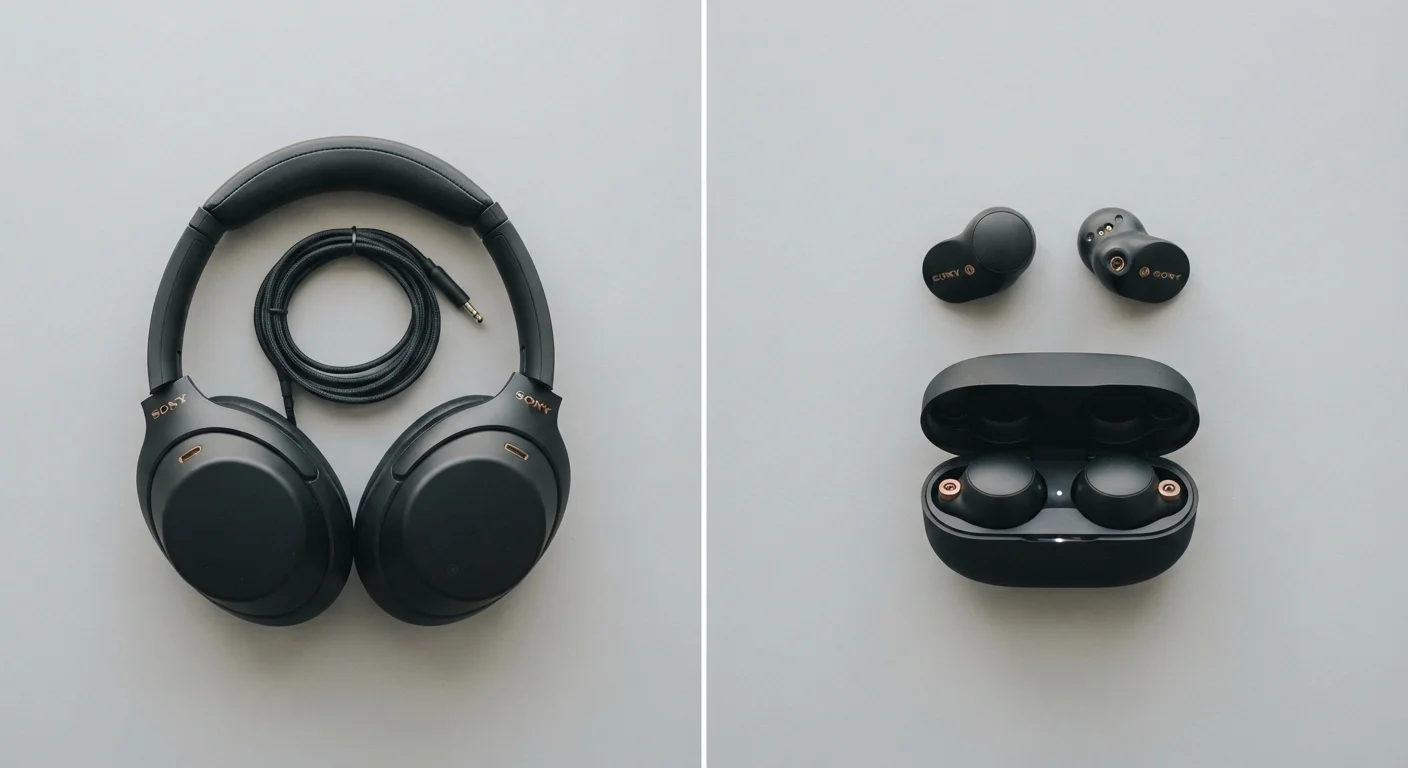
The most fundamental difference between over-ear and in-ear headphones isn't price or brand — it's where the driver sits relative to your ear. A driver is the small speaker component that converts an audio signal into sound waves. In over-ear headphones (also called circumaural headphones), large drivers — often 40mm to 50mm in diameter — sit inside padded ear cups that fully surround the outer ear. In-ear headphones (sometimes called IEMs, short for in-ear monitors) use tiny drivers, typically 8mm to 15mm, housed in a nozzle that sits directly inside the ear canal.
That placement gap has cascading effects. Over-ear designs create a listening chamber — a small pocket of air between the driver and your eardrum — which contributes to a sense of openness and space in the audio, often described as a wide soundstage. In-ear designs bypass that air gap entirely, delivering sound more directly, which can increase clarity and perceived bass intensity but produces a more enclosed, "in-your-head" feel to the audio.
For a closer look at how these trade-offs play out day-to-day, see how over-ear and in-ear headphones differ for daily use.
Sound Character: Soundstage, Bass, and Isolation
Driver size influences bass response in a straightforward way: larger surface area moves more air, which generally makes low frequencies feel fuller and more physical. Over-ear headphones often reproduce bass with a sense of weight and body that smaller drivers struggle to match at the same volume level. However, in-ear headphones compensate through their ear-canal seal. When tips fit correctly, they trap bass energy close to the eardrum, which can make the low end feel punchy and immediate even from a small driver.
Soundstage — the perceived width and depth of the audio space — tends to favor over-ear designs. Instruments and vocals feel more spread out, similar to listening through speakers in a room rather than through headphones. In-ear listening typically sounds more centered and intimate, though some higher-end IEM designs use multiple drivers per ear to approximate a wider image.
Noise isolation also works differently in each style. In-ear tips form a physical plug in the ear canal, which can block a meaningful amount of ambient noise passively — no electronics required. Over-ear cups attenuate sound by surrounding the ear, but the seal depends heavily on head shape and how snugly the cups press. Active vs. passive noise cancellation work very differently — understanding that distinction helps when evaluating either headphone type.
| Over-Ear Headphones | In-Ear Headphones | |
|---|---|---|
| Driver size | 40–50mm (large) | 8–15mm (small) |
| Soundstage | Wide, spacious, speaker-like feel | Narrower, more intimate |
| Passive noise isolation | Moderate, depends on cup seal | Strong when ear tips fit correctly |
| Bass character | Full-bodied, physical weight | Punchy and direct via ear-canal seal |
| Portability | Bulky; requires carrying case | Compact; fits in a pocket |
| Extended comfort | Good for stationary use; can cause heat | Dependent on correct tip fit |
| Best use context | Home, desk, focused listening | Commuting, travel, workouts |
Comfort, Portability, and Practical Fit
Over-ear headphones distribute their weight across the top of the head and around the ears, which many people find comfortable for sessions lasting an hour or more — provided the clamping force isn't too tight. The trade-off is size and heat. Ear cups trap warmth, and the headband adds bulk that makes folding them into a bag a deliberate act rather than a casual one.
In-ear headphones weigh almost nothing and disappear into a pocket or small case. That portability makes them the practical default for commutes, travel, and workouts. The comfort equation is more personal, though: fit depends entirely on finding the right ear-tip size and material. A poor seal isn't just a comfort issue — it degrades both bass response and isolation. Most in-ear headphones include multiple tip sizes precisely because ear canals vary significantly between people.
Getting the Right Ear-Tip Fit
With in-ear headphones, the ear tip is doing two jobs simultaneously: keeping the headphone stable and creating the seal that enables both bass response and passive isolation. Always test the fit before judging the sound. If bass sounds thin or ambient noise is loud, try a different tip size or material — silicone and foam tips feel and isolate differently. Most manufacturers include at least three sizes in the box for exactly this reason.
If you're specifically evaluating in-ear options for physical activity, the considerations shift further — what specs and features actually matter for running earbuds covers fit stability, water resistance, and other factors that matter when you're moving.
Choosing Based on How You Actually Listen
The clearest way to decide between these two styles is to audit your listening habits honestly. If most of your audio time happens at a desk, on a couch, or in a dedicated listening chair, over-ear headphones fit naturally into that routine. The larger form factor is irrelevant when you're stationary, and the soundstage benefit is most noticeable in that kind of focused, seated session.
If your listening is woven into movement — a daily train ride, a lunch walk, gym sessions — in-ear headphones remove friction in ways that matter practically. They're also easier to use during video calls where taking headphones on and off repeatedly would be awkward. For households where one person switches between both scenarios, some people own both styles for different contexts rather than forcing one to cover everything.
If the wired-versus-wireless question is also part of your decision, what changes for everyday listening between wireless earbuds and wired headphones lays out what you gain and give up going wireless — a separate but related trade-off worth understanding alongside form factor. Before finalizing any in-ear purchase, it's also worth reviewing what shoppers commonly get wrong when buying wireless earbuds, including codec support and IP ratings that affect long-term satisfaction.
40–50mm
Typical over-ear driver diameter
Over-ear drivers are roughly 3–5x larger in diameter than in-ear drivers, moving substantially more air per cycle.
Up to 37 dB
Passive isolation possible with in-ear tips
Well-fitted foam ear tips can provide meaningful ambient noise reduction without any active electronics, according to acoustic engineering references.