

Key Takeaways
- A steady check engine light usually signals a non-emergency issue, but should be diagnosed soon.
- A flashing check engine light almost always indicates a serious, active problem requiring immediate attention.
- A code reader can tell you which fault triggered the light - many auto parts stores will read codes for free.
- Ignoring the light risks turning a cheap fix into a costly repair.
- Some common triggers - like a loose gas cap - cost nothing to fix.
Check Engine Light
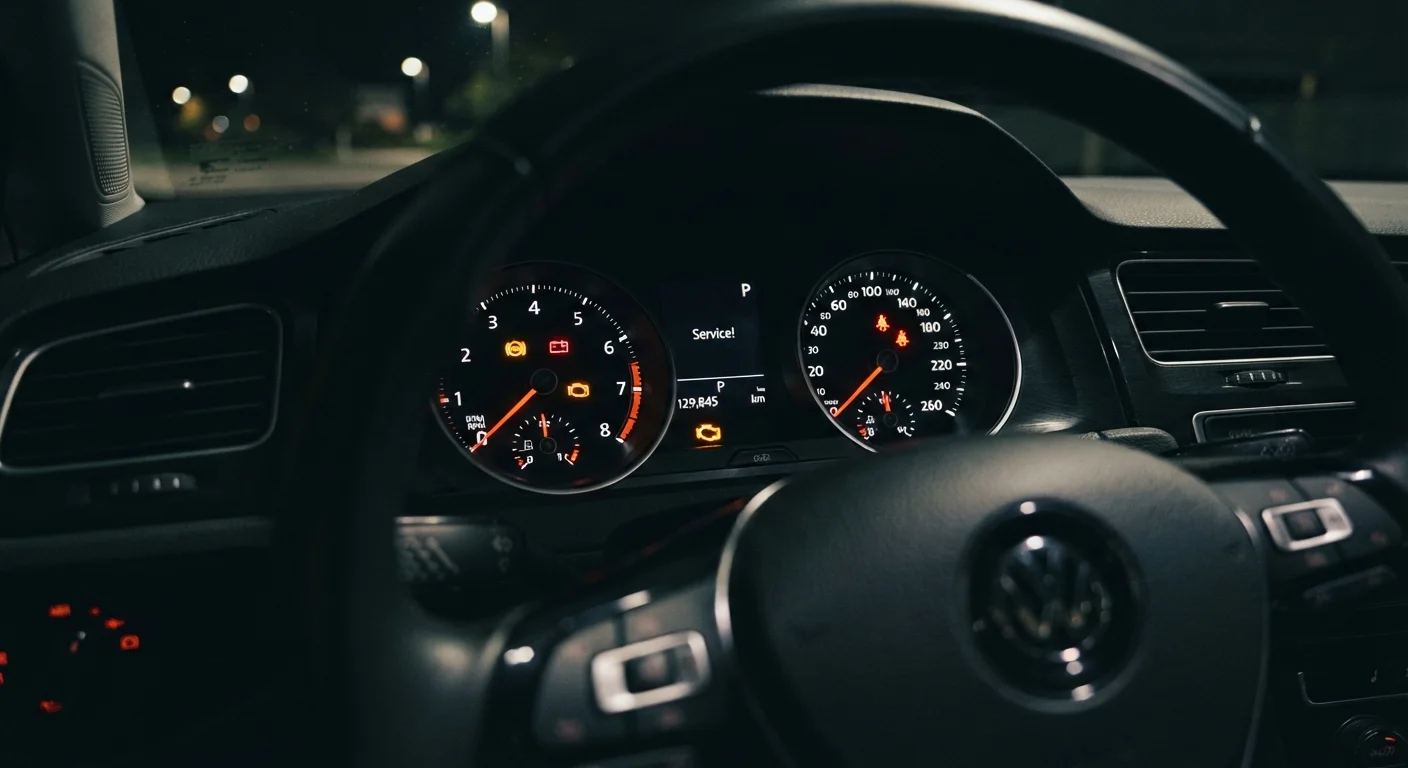
The check engine light - officially called the Malfunction Indicator Lamp (MIL) - is a warning on your dashboard that your vehicle's onboard diagnostic system has detected a problem. It can be triggered by hundreds of different fault codes stored in your car's computer. Some causes are minor and inexpensive; others can lead to serious engine damage if ignored.
The OBD-II (On-Board Diagnostics, second generation) system, standard on all U.S. vehicles sold after 1996, continuously monitors sensors across the engine, transmission, and emissions systems and logs a Diagnostic Trouble Code (DTC) whenever a reading falls outside acceptable parameters.
Steady vs. Flashing: The First Thing to Notice
Before anything else, look at how the light behaves. This single detail tells you how urgently you need to act.
Steady light: Your car's computer has detected a fault, but it's not currently causing acute damage. You have time - usually days, not minutes - to get to a mechanic. Don't ignore it, but you don't need to pull over immediately.
Flashing light: This signals an active misfire, meaning unburned fuel is reaching the catalytic converter. Continuing to drive risks destroying the converter - a repair that can cost $1,000 or more. Stop driving as soon as it's safe to do so and get the vehicle inspected promptly.
See our full dashboard warning light guide for a broader look at what other indicators mean and when they demand immediate action.
The Most Common Causes - Ranked by Urgency
Hundreds of fault codes can illuminate the check engine light. Most fall into a handful of common categories:
- Loose or faulty gas cap - Low urgency. Tighten or replace it. The light typically clears within a day or two of normal driving.
- Oxygen (O2) sensor failure - Moderate urgency. A failing O2 sensor won't strand you immediately, but it reduces fuel efficiency and can eventually damage the catalytic converter if ignored.
- Catalytic converter failure - High urgency (and high cost). Usually caused by ignoring earlier issues like misfires or a bad O2 sensor. Reduces emissions control and performance.
- Mass airflow (MAF) sensor fault - Moderate urgency. Affects how the engine calculates the fuel-air mix; can cause rough idling or poor acceleration.
- Spark plug or ignition coil failure - Moderate to high urgency depending on severity. A misfiring cylinder puts stress on other components and often causes the light to flash.
- Evaporative emission control (EVAP) system leak - Low urgency. Fuel vapor escaping from the system is an emissions issue, but rarely causes drivability problems immediately.
~400+
OBD-II fault codes that can trigger the light
The Society of Automotive Engineers (SAE) defines hundreds of standardized Diagnostic Trouble Codes covering engine, transmission, and emissions systems.
~$200-$1,200+
Typical repair cost range for common causes
Costs range from near-zero (a gas cap) to over a thousand dollars (catalytic converter replacement), illustrating why early diagnosis matters.
1 in 4
Estimated cars on U.S. roads with a fault code stored
Industry repair data has historically suggested a significant share of vehicles have at least one stored code, often with the driver unaware.
What to Do When the Light Comes On
Don't panic - but don't assume it'll sort itself out, either. Here's a practical sequence:
- Check the gas cap first. Make sure it's tight and not cracked. If you just filled up and the light appeared shortly after, this is the likely culprit.
- Assess how the car feels. Is it running normally, or do you notice rough idling, sluggish acceleration, or unusual smells? Noticeable drivability problems raise urgency.
- Get the code read. Many auto parts stores offer free OBD-II scans. The code alone doesn't tell you everything - context matters - but it's essential information before authorizing any repair.
- Consult a qualified mechanic. A code points to a system, not always a specific part. A mechanic can confirm the diagnosis and recommend the right repair.
Buy a Basic OBD-II Scanner
Inexpensive handheld OBD-II scanners are widely available and let you read - and often clear - fault codes yourself. Even a basic model gives you the code number to research before walking into a shop, so you're not going in blind. This is general information; for any repair decision, consult a qualified mechanic.
Before your next road trip, check out the pre-trip vehicle safety checklist to catch other potential issues before they become roadside problems.
Why Ignoring It Usually Costs More
Vehicle systems are interconnected. A small issue that triggers the check engine light today can cascade into a much larger repair if left unaddressed. A failing oxygen sensor, for example, causes the engine to run with an improper fuel mixture - which gradually damages the catalytic converter. A misfire that goes unchecked can crack pistons or damage valves.
Routine awareness helps you catch these signals early. Pair your check engine awareness with your car's scheduled maintenance intervals - many faults that trigger the light are the result of skipped or overdue service.
Clearing the Code Isn't the Same as Fixing the Problem
Some drivers clear fault codes using a scanner or by disconnecting the battery to make the light go away. This erases the stored code but does not fix the underlying issue - the light will return if the problem persists. It also temporarily clears emissions readiness monitors, which can cause a vehicle to fail a state inspection if tested too soon after a reset.
Staying on top of basics like tire condition is part of the same proactive mindset. The tire pressure and tread depth guide is a good starting point for understanding what your car is telling you before a warning light ever appears.