

Key Takeaways
- Houseplants can add visual warmth and texture to shelves without requiring a design background.
- Light availability is the single biggest factor in whether a plant will thrive in a given spot.
- Overwatering is more common than underwatering and is a leading cause of houseplant death.
- Some popular houseplants are toxic to pets and children - always verify before purchasing.
- A few well-chosen plants create more impact than cluttered shelves packed with struggling greenery.
Adds organic texture no manufactured décor can replicate
The varied shapes, leaf patterns, and shades of green create visual interest that feels natural rather than staged. Even a single well-placed plant can make a shelf arrangement feel complete.
Highly affordable compared to most décor options
Many popular houseplants - pothos, spider plants, snake plants - are widely available at modest price points and can even be propagated from cuttings at no cost, making them one of the most budget-friendly ways to refresh a room.
Works in almost any interior style
Whether a room leans bohemian, Scandinavian, or traditionally American, there's a plant variety and pot style that fits naturally without requiring a redesign of the whole space.
Supports a sense of daily routine and wellbeing
The act of watering and tending plants gives many people a small, satisfying ritual. While broad health claims about plants should be viewed cautiously, the habit itself can feel grounding and purposeful.
Easy to rearrange as your style evolves
Unlike furniture or built-ins, plants can be moved from room to room as your taste changes - or relocated if they're not thriving in one spot.
Requires consistent care and attention
Even low-maintenance species need periodic watering, occasional repotting, and dust removal from leaves. Neglect accumulates quickly, and a shelf of struggling plants detracts from rather than enhances a room.
Light conditions may not match plant requirements
Many appealing tropical varieties need bright indirect light that simply isn't available in north-facing rooms or interiors far from windows. Buying without assessing light levels first often leads to disappointment.
Potential toxicity risk for pets and children
A surprising number of common houseplants are toxic if ingested by cats, dogs, or small children. This requires careful research before choosing which species to bring home.
Overwatering is an easy and common mistake
Most houseplants die from too much water rather than too little. Poor drainage, incorrectly sized pots, and watering on a fixed schedule regardless of soil moisture are the most frequent culprits.
Can attract pests if conditions aren't right
Fungus gnats, spider mites, and scale insects are common problems that spread quickly across multiple plants. Humid soil, low airflow, and overcrowded shelves increase the risk.
Our Verdict
Plants are one of the most accessible and affordable tools for elevating a room's look and feel. They add organic texture, color, and a sense of life that few other décor choices can match. That said, they work best when matched to your actual living conditions and lifestyle - not just your aesthetic goals.
Plants as décor are ideal for anyone who wants an approachable, budget-friendly way to add personality to their space and is willing to invest a small amount of regular time in basic care.
Why Plants Work as Décor
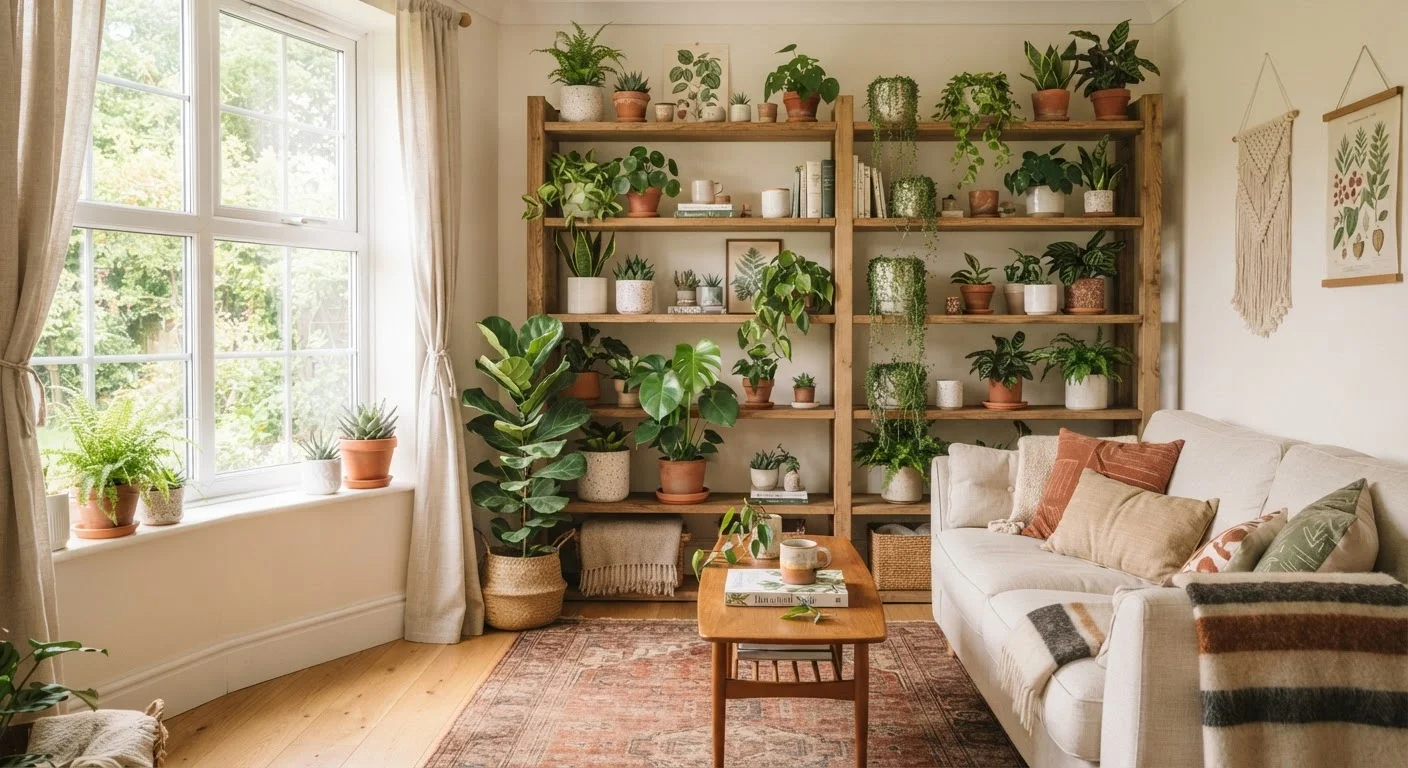
Houseplants do something that pillows, candles, and wall art cannot: they grow. That sense of living change gives a room an energy that static objects simply don't provide. A trailing pothos on a bookshelf or a sculptural fiddle-leaf fig in the corner draws the eye without demanding a significant budget or design expertise.
Plants also add layers of texture and varying shades of green that complement nearly any color palette - whether your home leans neutral and minimal or bold and eclectic. If you're working through the ideas in decorating a home from scratch, greenery is one of the most forgiving starting points.
Beyond aesthetics, many people find caring for plants a grounding daily habit. Even watering a single succulent on a windowsill can make a space feel more intentional and personal.
Adds organic texture no manufactured décor can replicate
The varied shapes, leaf patterns, and shades of green create visual interest that feels natural rather than staged. Even a single well-placed plant can make a shelf arrangement feel complete.
Highly affordable compared to most décor options
Many popular houseplants - pothos, spider plants, snake plants - are widely available at modest price points and can even be propagated from cuttings at no cost, making them one of the most budget-friendly ways to refresh a room.
Works in almost any interior style
Whether a room leans bohemian, Scandinavian, or traditionally American, there's a plant variety and pot style that fits naturally without requiring a redesign of the whole space.
Supports a sense of daily routine and wellbeing
The act of watering and tending plants gives many people a small, satisfying ritual. While broad health claims about plants should be viewed cautiously, the habit itself can feel grounding and purposeful.
Easy to rearrange as your style evolves
Unlike furniture or built-ins, plants can be moved from room to room as your taste changes - or relocated if they're not thriving in one spot.
The Real Challenges of Living with Plants
The appeal of a shelf full of lush greenery is easy to understand, but the reality requires honest planning. Plants are living things with specific needs, and placing them purely for looks - without considering their environment - is a fast track to wilted, yellowing leaves.
Light is the most common obstacle. Many apartments and homes in the U.S. don't have the south- or west-facing windows that most popular tropical plants prefer. Low-light tolerant species like snake plants and ZZ plants exist, but every plant still needs some natural light to survive long-term.
Humidity is another factor that's easy to overlook. Bathrooms and kitchens naturally hold more moisture, while living rooms with forced-air heating in winter can become surprisingly dry - a difficult environment for ferns and calatheas.
Requires consistent care and attention
Even low-maintenance species need periodic watering, occasional repotting, and dust removal from leaves. Neglect accumulates quickly, and a shelf of struggling plants detracts from rather than enhances a room.
Light conditions may not match plant requirements
Many appealing tropical varieties need bright indirect light that simply isn't available in north-facing rooms or interiors far from windows. Buying without assessing light levels first often leads to disappointment.
Potential toxicity risk for pets and children
A surprising number of common houseplants are toxic if ingested by cats, dogs, or small children. This requires careful research before choosing which species to bring home.
Overwatering is an easy and common mistake
Most houseplants die from too much water rather than too little. Poor drainage, incorrectly sized pots, and watering on a fixed schedule regardless of soil moisture are the most frequent culprits.
Can attract pests if conditions aren't right
Fungus gnats, spider mites, and scale insects are common problems that spread quickly across multiple plants. Humid soil, low airflow, and overcrowded shelves increase the risk.
For households with pets or young children, toxicity is a non-negotiable consideration. Many common houseplants - including pothos, philodendrons, and certain lilies - are toxic if ingested. Always verify a plant's safety profile before bringing it home.
Styling Plants Without Overcrowding Your Shelves
One of the most common decorating missteps is treating plants like filler - buying too many and cramming shelves until the result looks chaotic rather than curated. A few principles can help you style with greenery more intentionally.
Vary height and form. Combine trailing plants that spill over shelf edges with upright or compact varieties. This contrast creates visual rhythm, much like mixing tall and short objects in any vignette.
Leave breathing room. A shelf that's 30-40% negative space tends to look more polished than one that's packed. Plants need airflow too, which helps prevent fungal issues.
Group by care needs. Placing plants with similar watering and light requirements together makes maintenance simpler - and reduces the chance of overwatering one plant while trying to keep a neighbor alive.
When Pots Matter as Much as Plants
The container a plant lives in carries significant visual weight on a shelf. Terracotta pots suit warm, earthy palettes; matte white or black ceramics complement modern or minimalist spaces. Beyond aesthetics, drainage holes are essential - decorative pots without holes can trap water and lead to root rot. If you love the look of a pot without drainage, use it as a decorative outer cover with a functional grower's pot inside.
If your shelves are part of a smaller room, keep scale in mind. Very large plants can overwhelm compact spaces, while tiny pots can disappear visually. Arranging décor in tight spaces follows similar principles of proportion and visual weight.
Plants also factor into why certain rooms feel more alive than photos suggest. What makes rooms feel lived-in often comes down to sensory layering - and greenery is a meaningful part of that.
~66%
U.S. households that own at least one houseplant
According to the National Gardening Association, roughly two-thirds of American households report owning houseplants, reflecting widespread interest in interior greenery.
#1
Most common cause of houseplant death
Horticulture educators consistently identify overwatering - not underwatering - as the leading reason houseplants fail in home environments.
Matching Plants to Your Lifestyle, Not Just Your Aesthetic
Before adding any plant to your home, ask yourself how much time you realistically want to spend on care each week. Be honest. A busy household that travels frequently is better served by drought-tolerant species - cacti, succulents, snake plants - than by moisture-loving tropical varieties that need attention every few days.
It's also worth thinking about your home's conditions as they actually are, not as you'd like them to be. If your apartment gets limited sun, lean into low-light plants rather than fighting for species that will slowly decline in dim corners.
For those interested in a deeper refresh, signs your space has outgrown its style can help you decide where plants fit into a broader décor update - and whether greenery alone is enough of a shift or part of a larger change you're ready for.
This article is for general informational and home décor purposes only. Plant toxicity guidance provided here is general in nature; always consult a veterinarian or poison control resource for specific safety concerns related to pets, children, or health conditions.