

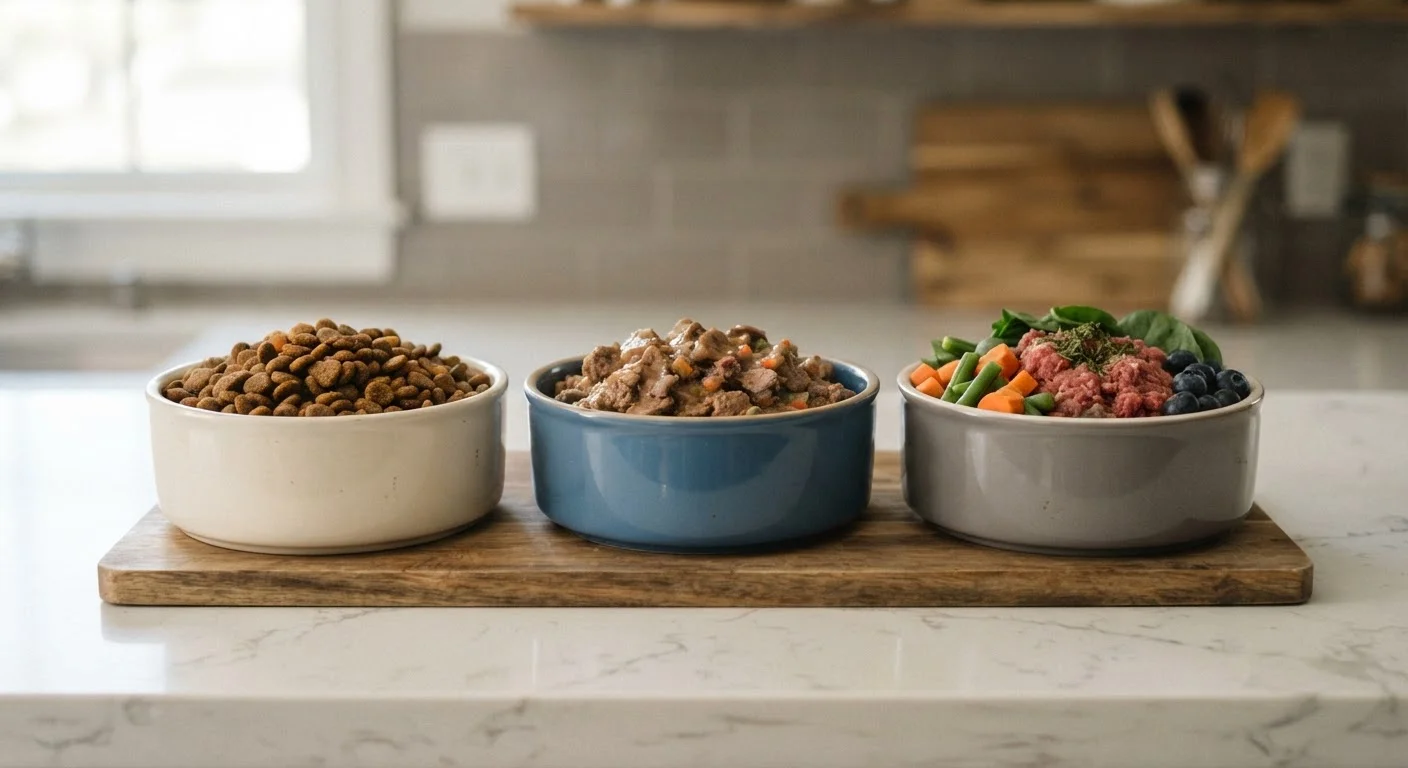
Key Takeaways
- No single diet type is universally superior — the right choice depends on your pet's health, age, and lifestyle.
- Raw diets carry real food safety risks for pets and their human households; consult your vet before switching.
- Moisture content is a key difference: wet food provides significantly more hydration than dry kibble.
- AAFCO nutritional completeness statements help verify whether any food — dry, wet, or raw — meets minimum standards.
- Veterinary guidance is essential when making significant diet changes, especially for pets with health conditions.
Our Verdict
Dry food offers convenience and is nutritionally complete when it meets AAFCO standards, but wet food's higher moisture content can benefit urinary health and picky eaters. Raw diets remain controversial — some owners report benefits, but current evidence of superiority is limited and the safety risks are well-documented. For most households, a high-quality commercial diet tailored to your pet's life stage is the most practical, evidence-supported choice.
| Best for | Recommended |
|---|---|
| Pet owners prioritizing convenience and dental support | Dry Food (Kibble) |
| Cats prone to urinary issues or pets who under-drink | Wet Food (Canned) |
| Owners willing to invest time in safety protocols, with veterinary supervision | Raw Diet (with caution) |
| Pets with health conditions or food sensitivities | Vet-guided customized approach |
Why the Debate Matters More Than Ever
Walk down any pet store aisle and the variety of feeding options is striking — grain-free kibble, pâté-style canned food, freeze-dried raw nuggets. Pet owners face more choices than ever, and marketing claims can make each category sound like the only responsible option. This article cuts through the noise by looking at what peer-reviewed research and veterinary consensus actually support about dry, wet, and raw diets for dogs and cats.
Understanding the differences starts with reading labels carefully. If you haven't yet, learning how to decode pet food labels will give you a foundation for evaluating any diet type.
~70%
Moisture in wet/canned pet food
Canned food typically contains 70–80% water, compared to roughly 10% in dry kibble, according to general veterinary nutrition references.
15+
Pathogens found in raw diet studies
Multiple peer-reviewed studies have identified bacterial contaminants including Salmonella and Listeria in commercially prepared raw pet foods.
Dry Food: Convenient, but Not Without Caveats
Kibble is the most widely fed diet format in the United States, and for practical reasons: it stores easily, costs less per serving than wet food, and many formulas carry AAFCO (Association of American Feed Control Officials) statements indicating nutritional completeness. Those statements matter — they signal that the food meets defined minimum nutrient profiles for a given life stage.
On the downside, kibble is low in moisture — typically around 10% water — which is a meaningful concern for cats, who evolved as desert hunters with a low thirst drive. Cats fed exclusively dry food may consume chronically less water than their kidneys prefer. Some vets also question the dental benefit often attributed to kibble; while the mechanical chewing action helps, it's not a substitute for active dental care.
Check for the AAFCO Statement
Regardless of whether you feed dry, wet, or raw, look for an AAFCO nutritional adequacy statement on the label. It should specify the life stage — puppy/kitten, adult, or all life stages — the food is formulated for. A food without this statement may not meet your pet's minimum nutritional needs. This is one of the most reliable indicators of a nutritionally complete diet.
For a deeper side-by-side view of how these two mainstream formats compare, see what the research says about wet versus dry kibble.
Wet Food: Higher Moisture, Higher Cost
Canned and pouched wet foods typically contain 70–80% moisture, which more closely mirrors the water content of whole prey animals. This can be beneficial for pets prone to urinary tract disease, kidney issues, or those who simply don't drink enough. Cats with a history of urinary crystals or struvite stones are often advised by veterinarians to increase moisture intake, making wet food a frequently recommended option.
Wet food tends to be more palatable for picky eaters and easier to chew, making it suitable for senior pets or those with dental problems. The trade-offs are cost — wet food is generally more expensive per calorie — and shelf life once opened. Uneaten portions must be refrigerated and discarded within a day or two.
How feeding format affects your pet's health over time explores these practical differences in greater detail.
Raw Diets: Promising Claims, Real Risks
Raw feeding — sometimes called BARF (Biologically Appropriate Raw Food) or prey-model feeding — typically includes uncooked meat, bones, and organs. Proponents argue that it more closely replicates what dogs and cats would eat in the wild, and some owners report improved coat condition and digestion. However, the scientific evidence for these claims remains limited and largely anecdotal.
What is well-documented is the safety concern. Studies published in veterinary journals, including research cited by the American Veterinary Medical Association (AVMA), have found that commercial and home-prepared raw diets frequently test positive for pathogens including Salmonella and Listeria. These bacteria pose health risks not only to pets — especially immunocompromised animals — but also to people in the household through environmental contamination.
Raw Diets and Household Safety
The American Veterinary Medical Association advises against feeding raw or undercooked animal-source protein to pets, citing documented risks of bacterial contamination. Households with young children, elderly individuals, pregnant people, or immunocompromised members face heightened risk. If you are considering a raw diet, discuss the full safety implications — for both your pet and your household — with your veterinarian before starting.
| Dry Food (Kibble) | Wet Food (Canned) | Raw Diet | |
|---|---|---|---|
| Moisture Content | ~10% | 70–80% | Varies (often 60–70%) |
| AAFCO-Compliant Options | Widely available | Widely available | Limited; verify carefully |
| Cost Per Serving | Generally lower | Moderate to high | High |
| Convenience | High — easy storage | Moderate — refrigerate after opening | Low — handling-intensive |
| Food Safety Risk | Low | Low | Higher — documented pathogen risk |
| Palatability | Variable | Generally high | Often high |
| Evidence Base | Strong for complete formulas | Strong for complete formulas | Limited; safety concerns documented |
If you do choose to explore raw feeding, doing so under veterinary supervision, with attention to food handling protocols and nutritional completeness, is essential. The AVMA's raw pet food policy advises against raw or undercooked animal-source protein specifically because of these documented risks.
Making the Right Call for Your Pet
No feeding format wins outright across all categories. A healthy adult dog doing well on a quality AAFCO-complete kibble may have no reason to switch. A senior cat with kidney disease may benefit meaningfully from transitioning to wet food under veterinary guidance. The evidence doesn't support a one-size-fits-all answer — it supports individualized decisions made with a vet's input.
Key questions to ask include: Does the food carry an AAFCO nutritional adequacy statement? Is it formulated for your pet's specific life stage? Does your pet have any health conditions that affect dietary needs? What is realistic for your household in terms of cost, storage, and food safety?
Comparing dry and wet food trade-offs for dogs and cats can help you work through the everyday practical considerations alongside your vet's clinical guidance.
This article is for general informational purposes only and does not constitute veterinary or medical advice. Always consult a licensed veterinarian before making significant changes to your pet's diet, especially if your pet has existing health conditions.